







What's Happening?
An international team of scientists in the United Kingdom has identified two experimental alloys, based on niobium and titanium, that exhibit remarkable resistance to brittle fracture at temperatures as low as 20 Kelvin (-253°C). This discovery, published
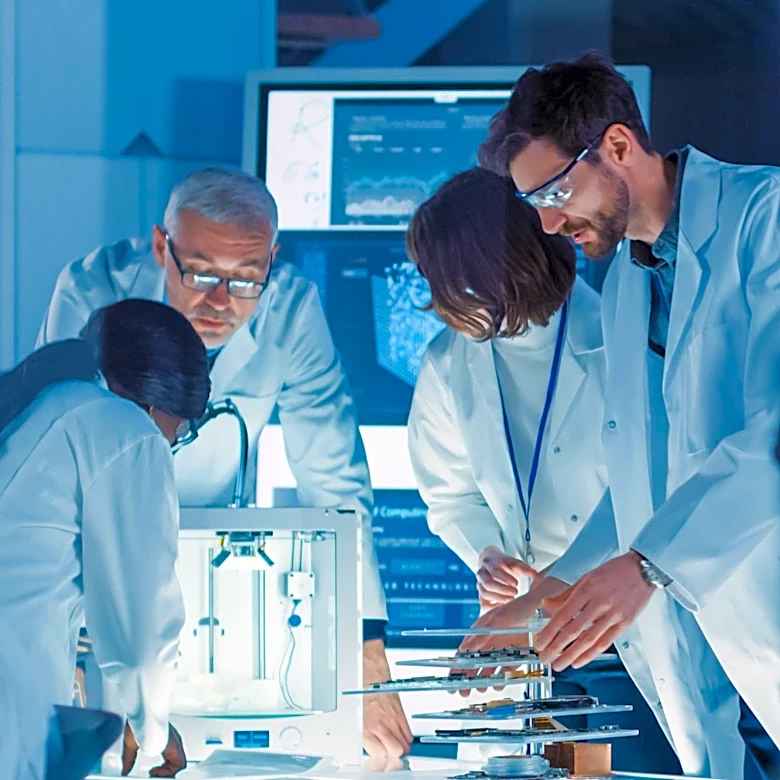
in the journal Nature, challenges the typical behavior of metals at cryogenic temperatures. Normally, metals become stronger but also more brittle when cooled, tending to crack under stress rather than deforming. This is particularly true for metals with a body-centered cubic crystal lattice, such as iron, tungsten, and chromium. The research involved testing samples in Oxfordshire, where they were cooled with gaseous helium and stretched at the Engin-X facility at the ISIS Neutron and Muon Source. Neutron beams were used to monitor internal changes in the material under load, allowing researchers to measure the forces withstood and the extent of deformation before failure. Electron microscopy and atom-probe analysis further revealed the distribution of elements within the alloys, providing crucial data for understanding the mechanism preventing brittle fracture.
Why It's Important?
This breakthrough has significant implications for industries requiring materials capable of operating in extreme cold, such as energy, transport, and aerospace. Current structural metals often suffer from increased brittleness at very low temperatures, limiting their application in cryogenic environments. The newly identified alloys offer a potential solution by maintaining ductility and resisting fracture under such conditions. The mechanism behind this resilience, nanoscale twinning—where small regions of the crystal structure rearrange into mirror-symmetrical configurations—allows the material to deform and absorb loads instead of propagating cracks. This alternative deformation process could lead to the development of more robust and reliable components for spacecraft, liquefied natural gas infrastructure, and advanced scientific instruments that operate at cryogenic temperatures. The ability to prevent brittle fracture at -253°C could enhance safety, extend operational lifespans, and enable new technological advancements in these critical sectors.
What's Next?
The researchers believe these findings offer a new approach to developing structural metals for extremely low-temperature applications. The next steps will likely involve further investigation into the precise mechanisms of nanoscale twinning and how to optimize the composition and processing of these niobium- and titanium-based alloys. This could include exploring variations in alloy ratios, microstructural engineering, and scaling up production for broader testing. Collaboration with industries in aerospace, energy, and cryogenics will be crucial to translate these laboratory findings into practical applications. The development of new manufacturing techniques compatible with these advanced materials will also be a key area of focus. Ultimately, the goal is to create a new generation of structural metals that can withstand the harshest cold environments, paving the way for more efficient and safer technologies in various high-tech fields.
Beyond the Headlines
The discovery of these ultra-cold-resistant alloys highlights a deeper understanding of material science at the atomic level. The phenomenon of nanoscale twinning, which allows these metals to deform rather than fracture, represents a significant advancement in our knowledge of material behavior under extreme conditions. This research could inspire new avenues of inquiry into other material systems and their responses to stress and temperature. Beyond immediate industrial applications, the principles uncovered here might inform the design of materials for future technologies, such as advanced superconducting systems or even components for deep-space exploration where temperatures are exceptionally low. The ability to engineer materials with such precise control over their deformation mechanisms opens up possibilities for creating 'smart' materials that can adapt to environmental stresses, pushing the boundaries of what is currently thought possible in materials engineering and potentially leading to unforeseen technological innovations.