






What's Happening?
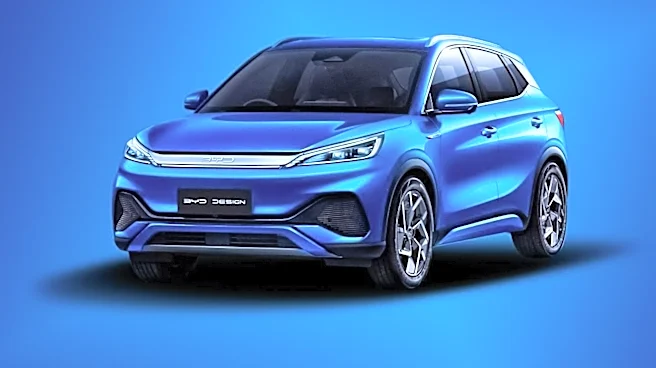
Chinese automakers are making significant inroads into the UK market, with sales of Chinese-made vehicles surging. Brands like BYD and Geely are offering models that are priced competitively compared to legacy automakers, attracting British consumers
with their value and advanced features. The UK does not impose additional tariffs on plug-in hybrid electric vehicles, unlike the European Union, providing an advantage for Chinese manufacturers. This expansion is part of a broader trend of increasing Chinese auto exports, as domestic demand in China cools. Analysts note that these vehicles offer enticing fits, finishes, and technology, appealing to cost-conscious buyers.
Why It's Important?
The growing presence of Chinese automakers in the UK highlights the shifting dynamics in the global automotive industry. As Chinese brands offer competitive pricing and advanced features, they challenge established automakers, potentially reshaping market shares and consumer preferences. This trend underscores the impact of government subsidies in China, which enable manufacturers to sell vehicles at lower prices internationally. The expansion of Chinese automakers may lead to increased competition, driving innovation and price adjustments among legacy brands. The UK market's openness to Chinese vehicles could influence other regions to reconsider their tariff policies.
What's Next?
Chinese automakers are likely to continue expanding their presence in international markets, leveraging competitive pricing and technological advancements. As they gain traction in the UK, they may explore further opportunities in Europe and other regions. Legacy automakers may respond by enhancing their offerings and adjusting pricing strategies to maintain market share. The success of Chinese brands could prompt discussions on trade policies and tariffs, potentially influencing international automotive trade dynamics. The industry may see increased collaboration between Chinese and Western manufacturers, focusing on technology sharing and joint ventures.
Beyond the Headlines
The rise of Chinese automakers in the UK raises questions about the long-term sustainability of their competitive pricing, given the reliance on government subsidies. As these brands gain market share, they may face scrutiny over their business practices and environmental impact. The cultural acceptance of Chinese vehicles reflects broader shifts in consumer attitudes towards global brands, potentially influencing perceptions of quality and reliability. The expansion of Chinese automakers may also impact employment and manufacturing practices in the UK, as local industries adapt to increased competition and collaboration.