



What's Happening?
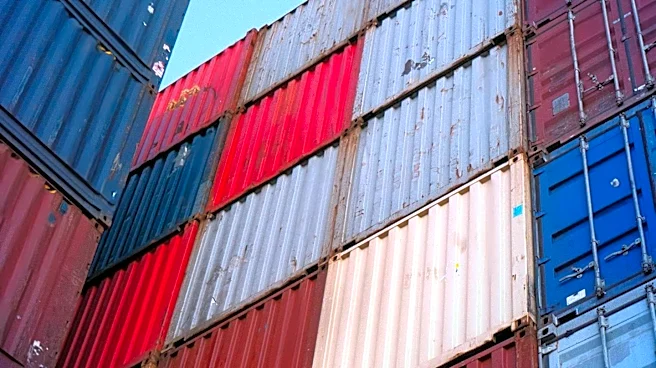
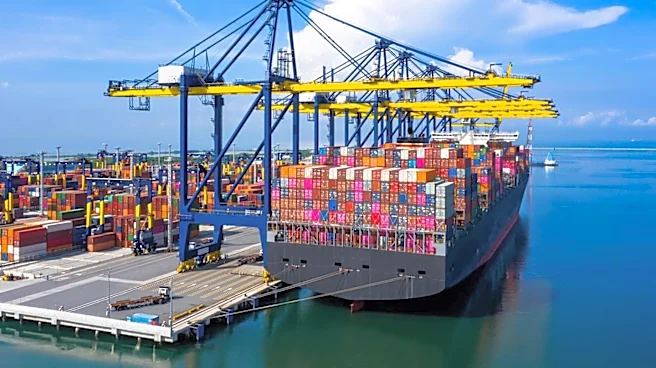
The Indian government has announced the Container Manufacturing Support Scheme (CMAS) with a budgetary outlay of ₹10,000 crore. This initiative aims to transform India from a net importer of containers to a self-reliant hub, enhancing maritime logistics
resilience and reducing freight cost volatility. The scheme aligns with broader policy frameworks such as 'Make in India', the Maritime Amrit Kaal Vision 2047, and the National Logistics Policy. It seeks to establish a globally competitive container manufacturing ecosystem by 2030, reducing import dependency and supporting India's ambition to become a $5 trillion economy.
Why It's Important?
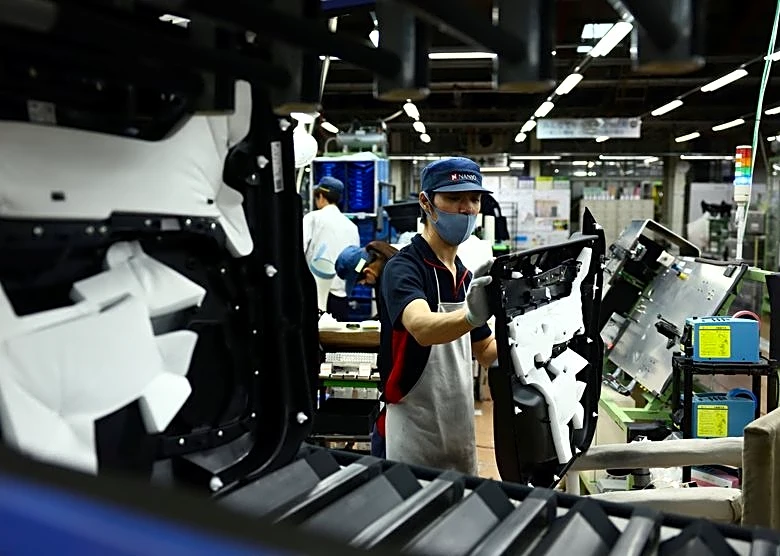
The CMAS is significant for India's economic resilience and trade competitiveness. By reducing dependence on imported containers, India can mitigate exposure to global supply chain disruptions and freight-rate volatility. The scheme is expected to generate employment across the container value chain, contributing to industrial growth and formal employment generation. Strengthening domestic manufacturing capabilities enhances India's strategic autonomy in maritime logistics, supporting its growing role in international trade. The initiative also promotes ancillary industries, creating secondary economic benefits across the value chain.
What's Next?
The government plans to establish dedicated manufacturing hubs in coastal regions to reduce logistics costs and enhance supply chain efficiency. Production-Linked Incentive (PLI) schemes tailored for container manufacturing may be introduced to attract investment and promote technological upgradation. Skill development programs will be developed to address the shortage of trained manpower in precision engineering. Strengthening port infrastructure under the Sagarmala Programme will ensure seamless container movement and reduce turnaround times.