
What's Happening?
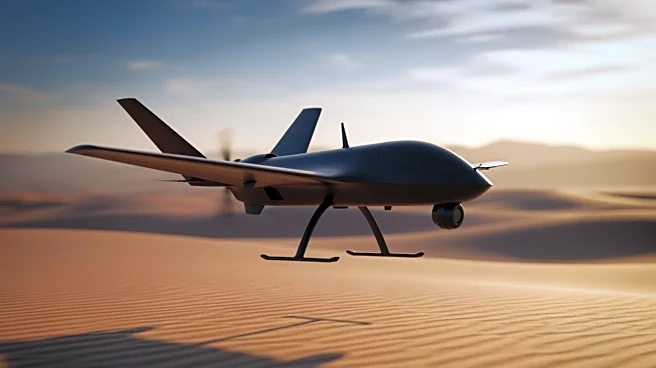
U.S. Central Command (CENTCOM) has activated Task Force Scorpion Strike (TFSS), the military's first dedicated kamikaze drone squadron in the Middle East. This development follows the successful launch
of the Low-Cost Uncrewed Combat Attack System (LUCAS) from the USS Santa Barbara. LUCAS, a loitering munition reverse-engineered from Iran's Shahed-136, represents a shift from expensive platforms like the MQ-9 Reaper to more cost-effective, swarm-based drone technology. The Pentagon aims to field mass-produced, expendable drones to counter adversaries using low-cost production to exert asymmetric pressure on U.S. forces.
Why It's Important?
The activation of TFSS and the deployment of LUCAS highlight a strategic pivot in U.S. military operations, focusing on cost-effective and scalable drone technology. This approach addresses the need for rapid response capabilities in high-attrition conflicts, where traditional, expensive platforms may not be sustainable. By leveraging advanced autonomy and networking capabilities, LUCAS aims to maintain U.S. operational superiority. This initiative is part of the Pentagon's broader Drone Dominance program, which seeks to acquire 300,000 low-cost drones, enhancing the U.S.'s ability to respond to evolving threats in the region.
What's Next?
The success of the LUCAS program will depend on the Pentagon's ability to scale production and integrate these systems into existing military operations. This will require significant changes in military doctrine and training to manage mass drone deployments effectively. The Pentagon plans to invest $1 billion to drive down production costs and establish a resilient supply chain. As the U.S. military adapts to this new paradigm, it will need to develop infrastructure and tactics to support the widespread use of autonomous drones on the battlefield.