What's Happening?
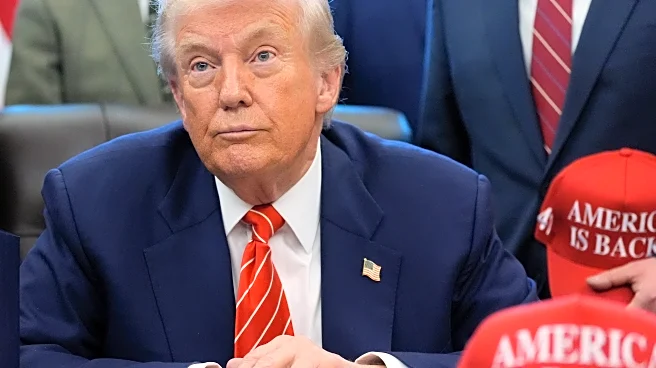
President Abdel Fattah al-Sisi of Egypt has welcomed an offer from U.S. President Donald Trump to mediate the ongoing dispute over the Grand Ethiopian Renaissance Dam (GERD). This development marks a new
chapter in the diplomatic tensions surrounding the dam, which has been a point of contention between Egypt, Ethiopia, and Sudan. The GERD, a significant hydroelectric project on a Nile tributary, is crucial to Ethiopia's development plans but poses potential threats to Egypt's water security. Egypt has expressed concerns that the dam's operation without a binding agreement could jeopardize its water supply and agricultural livelihoods. Sudan has also shown support for U.S. involvement, aligning with Egypt on the process. However, Ethiopia has not yet responded to the U.S. offer. The mediation proposal raises questions about international law on transboundary watercourses and the balance between Ethiopia's developmental rights and downstream countries' water security.
Why It's Important?
The Nile dam dispute is a critical issue affecting regional stability and water security in Northeast Africa. The involvement of the U.S. under President Trump's mediation could potentially lead to a resolution that balances the developmental needs of Ethiopia with the water security concerns of Egypt and Sudan. Successful mediation could prevent potential conflicts over water resources, which are vital for agriculture and livelihoods in the region. However, the proposal also carries risks, as external mediation might be perceived as infringing on national sovereignty, particularly by Ethiopia. The outcome of these negotiations could set a precedent for international water disputes and influence U.S. diplomatic relations in Africa.
What's Next?
The next steps involve determining the format and legal basis for the mediation, as well as the inclusion of other regional or international stakeholders. The U.S. initiative could lead to a binding framework on the dam's operation, including filling schedules and data exchange. However, the success of the mediation will depend on the willingness of the involved parties to compromise and adhere to international water laws. The reaction of Ethiopia and the role of existing African Union mechanisms will also be crucial in shaping the outcome of the negotiations.