
What's Happening?
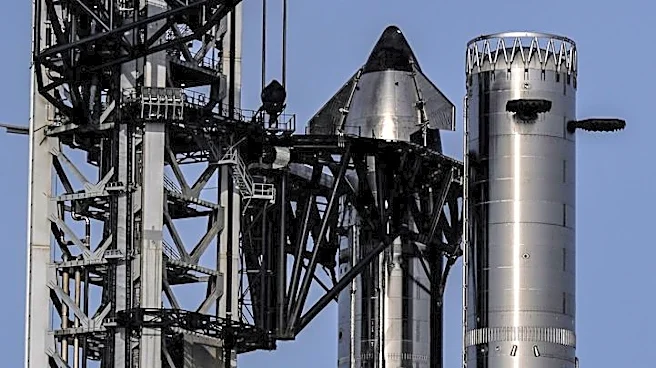
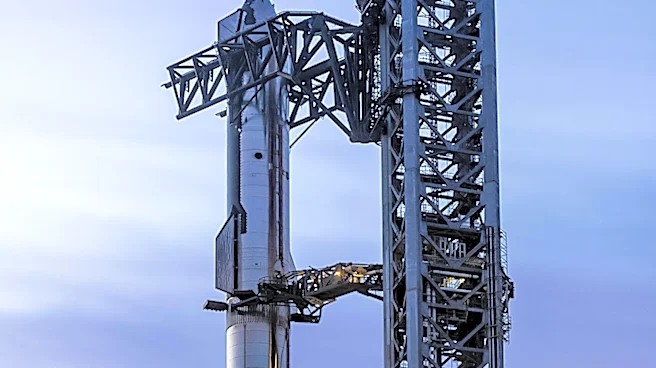
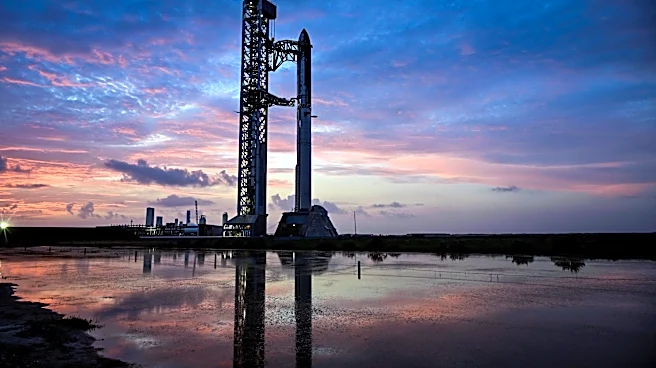
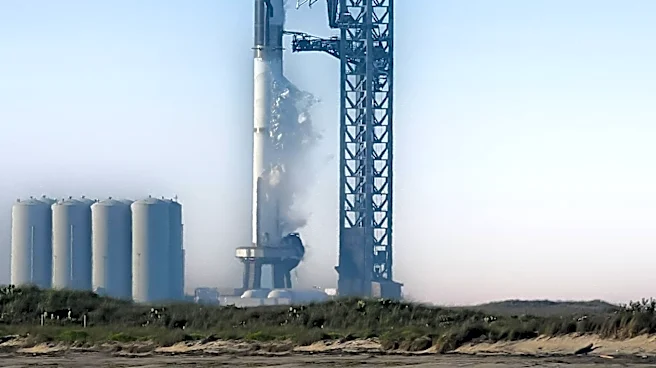
SpaceX's Super Heavy-Starship rocket completed its 13th test flight, achieving a mostly successful mission. The rocket, powered by 33 Raptor engines, launched from SpaceX's Starbase in Texas and deployed
20 Starlink satellites during its sub-orbital flight. The booster experienced a 'hard' splashdown in the Gulf of Mexico due to engine issues, but the Starship upper stage performed well, completing its climb to space and re-igniting a Raptor engine in a test for future lunar missions. This test is part of SpaceX's efforts to develop a lunar lander for NASA's Artemis program.
Why It's Important?
The successful aspects of this test flight are crucial for SpaceX's development of the Super Heavy-Starship as a reliable vehicle for future space missions, including NASA's Artemis program. The ability to deploy satellites and perform engine re-ignition tests in space are significant milestones in proving the vehicle's capabilities. However, the engine issues highlight the challenges SpaceX faces in refining the rocket's design and performance. As SpaceX aims to support lunar missions, overcoming these technical hurdles is essential for meeting NASA's timelines and ensuring the safety and reliability of future crewed missions.
What's Next?
SpaceX will continue to refine the Super Heavy-Starship design, addressing the engine issues encountered during the test flight. The company plans to increase the frequency of test flights to demonstrate the vehicle's reliability and readiness for operational use. As part of NASA's Artemis program, SpaceX is tasked with developing a lunar lander variant of the Starship, which will require further testing and certification. The success of these efforts is critical for SpaceX to meet NASA's deadlines and contribute to the agency's goal of returning humans to the moon by 2028.