





What's Happening?
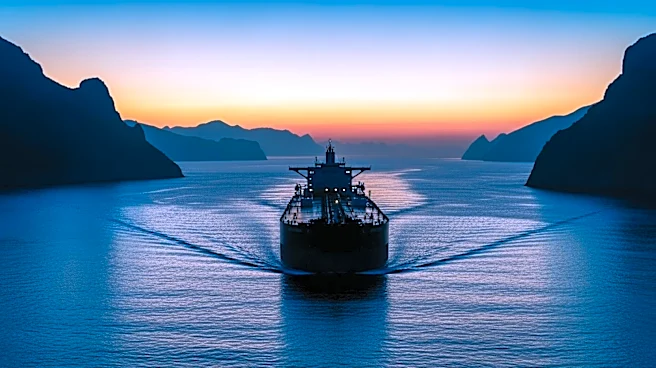
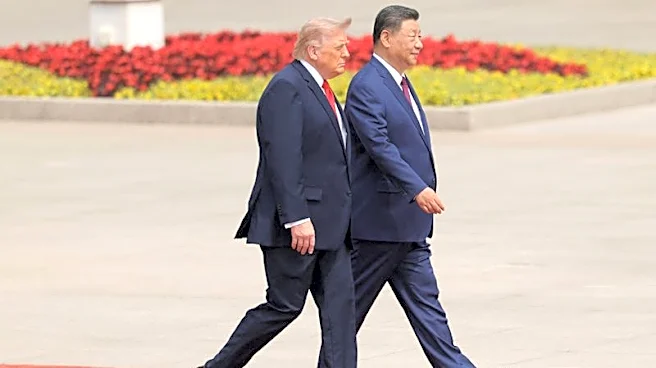
U.S. President Donald Trump, returning from a visit to China, stated that Chinese President Xi Jinping agreed that Iran must reopen the Strait of Hormuz. However, China has not indicated any intention to pressure Iran on this matter. The Strait of Hormuz,
a critical passage for global oil supply, has been effectively shut by Iran, leading to a significant oil supply crisis. Trump is considering lifting U.S. sanctions on Chinese oil companies buying Iranian oil, as China is the largest buyer of Iranian oil. Despite discussions, Xi did not commit to any specific actions regarding Iran, and China's foreign ministry criticized the ongoing conflict.
Why It's Important?
The closure of the Strait of Hormuz has caused a major disruption in global oil supply, affecting oil prices and economic stability worldwide. President Trump's discussions with Xi highlight the strategic importance of the strait and the complexities of international diplomacy in resolving such issues. The lack of a firm commitment from China underscores the challenges the U.S. faces in rallying international support to address the crisis. The situation also reflects broader geopolitical tensions involving the U.S., Iran, and China, with potential implications for global energy markets and international relations.
What's Next?
The U.S. may continue diplomatic efforts to persuade China and other nations to exert pressure on Iran to reopen the strait. Meanwhile, Iran has indicated plans to manage traffic through the strait, but only for parties cooperating with Tehran. The U.S. has paused its attacks but maintains a port blockade, with potential for resumed military action if negotiations fail. The ongoing situation may lead to further diplomatic engagements, with countries like Pakistan mediating between the U.S. and Iran. The outcome of these efforts will significantly impact global oil markets and international diplomatic relations.