






What's Happening?
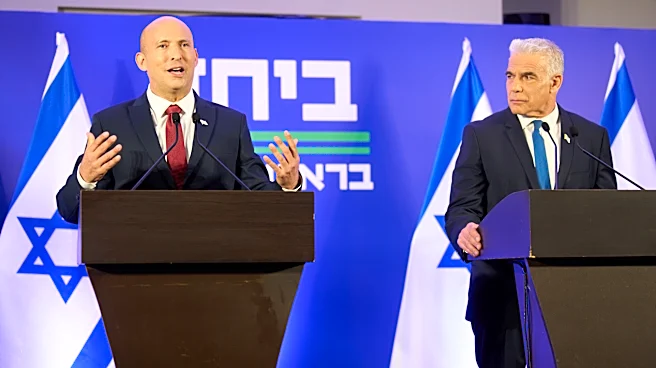
Prime Minister Benjamin Netanyahu is expected to delay the decision on establishing an inquiry committee into the October 7 massacre until the last minute. Despite a High Court deadline of July 1 to present a framework for the inquiry, the government
has made little progress. The coalition has not prioritized the bill to establish a parity inquiry committee, which has been stalled since its preliminary reading. The government is focusing on other legislative priorities, such as splitting the attorney general's role and prosecuting Nukhba terrorists. Netanyahu's decision-making strategy appears to be buying time, with the possibility of establishing a government inquiry committee before the next election.
Why It's Important?
The delay in establishing an inquiry into the October 7 massacre reflects the complex political dynamics within the Israeli government. The lack of progress on the inquiry committee bill indicates potential challenges in achieving consensus among coalition and opposition members. This situation underscores the tension between the government and the High Court, as well as the broader implications for accountability and transparency in addressing national security failures. The outcome of this decision could impact public trust in the government and influence future political alignments and electoral outcomes in Israel.
What's Next?
As the High Court's deadline approaches, the government may face increased pressure to demonstrate progress on the inquiry. Netanyahu's decision will likely be influenced by political calculations, including the potential impact on his leadership and the coalition's stability. The possibility of a government inquiry committee being established before the next election remains, with ongoing discussions and proposals being considered. The situation will continue to evolve as stakeholders, including political leaders and civil society groups, respond to the government's actions.