
What's Happening?
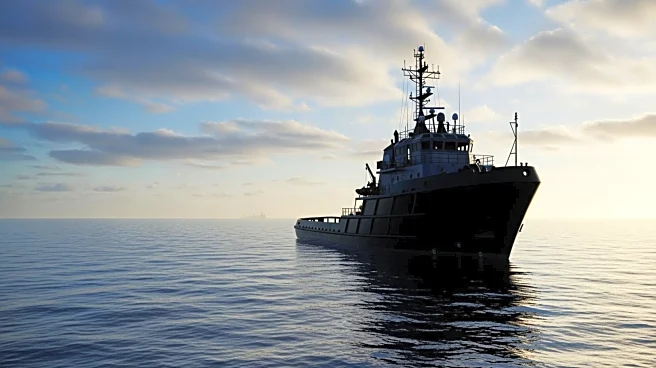
A Russian Navy salvage tug, the Alatau, successfully rescued a Philippine national who had been adrift in the South China Sea for several days. The seafarer had fallen overboard from a tanker named 'S
Grace,' which is not listed in shipping databases. After being rescued, the individual was given a medical checkup and found to be in good health. The Alatau, an Ingul-class fleet tug built in 1983, is part of Russia's Pacific Fleet and is currently en route to Vladivostok. The crew plans to keep the survivor on board until they reach their destination, where he will be offered repatriation.
Why It's Important?
This rescue operation highlights the ongoing humanitarian efforts by naval forces in international waters, emphasizing the importance of maritime safety and cooperation. The incident underscores the risks faced by seafarers and the critical role of naval support in emergency situations. For the U.S., this event may serve as a reminder of the strategic importance of maintaining a strong naval presence in key maritime regions, ensuring the safety of international shipping lanes and fostering international collaboration in rescue operations.
What's Next?
The rescued seafarer will remain on the Alatau until it reaches Vladivostok, where arrangements for his repatriation will be made. This incident may prompt further discussions on maritime safety protocols and the need for improved tracking and communication systems for vessels operating in international waters. Additionally, it could lead to increased cooperation between nations in the region to enhance search and rescue capabilities.
Beyond the Headlines
The rescue operation by the Russian Navy also reflects the broader geopolitical dynamics in the South China Sea, a region of strategic importance and frequent international tension. The presence of Russian naval forces in the area may be viewed in the context of Russia's broader military and diplomatic strategies, potentially influencing regional security policies and alliances.