





What's Happening?
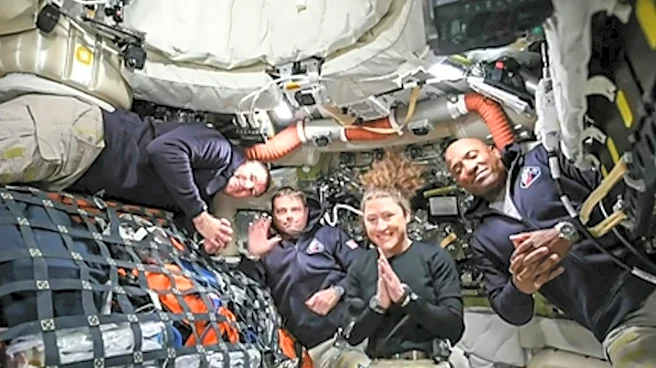
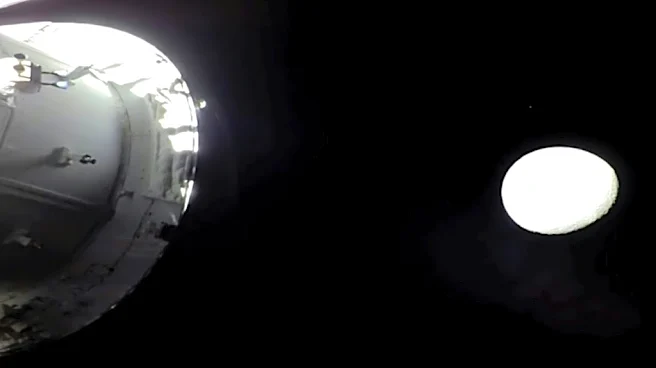
The Artemis II crew has successfully completed a historic mission by swinging around the moon, marking the first time in over 50 years that humans have traveled this far into deep space. This mission broke the Apollo record for the farthest human flight
ever into deep space. The crew's journey is a significant milestone in NASA's Artemis program, which aims to return humans to the lunar surface and eventually to Mars. The mission was reported by NBC News' Tom Costello from Houston, highlighting the technological advancements and international collaboration involved in this endeavor.
Why It's Important?
This mission is a pivotal step in the Artemis program, which seeks to establish a sustainable human presence on the moon and pave the way for future Mars exploration. The success of Artemis II demonstrates the capabilities of modern space technology and international partnerships in advancing human space exploration. It also reignites public interest and investment in space exploration, potentially leading to new scientific discoveries and technological innovations. The mission's success could inspire a new generation of scientists and engineers, contributing to the U.S.'s leadership in space exploration.
What's Next?
Following the success of Artemis II, NASA plans to continue with the Artemis program, with future missions aiming to land astronauts on the lunar surface. These missions will focus on establishing a sustainable presence on the moon, which will serve as a testing ground for technologies needed for Mars exploration. The program's progress will likely influence international space policy and collaboration, as well as private sector involvement in space exploration. Stakeholders, including government agencies and private companies, will be closely monitoring the program's developments and potential opportunities for collaboration.