



What's Happening?
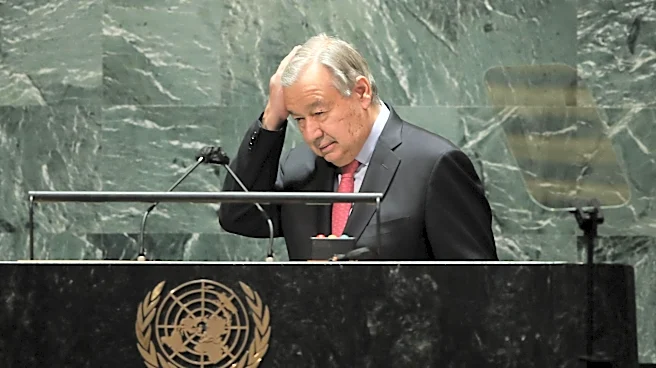
United Nations Secretary-General António Guterres has urged for the creation of an ambitious global treaty aimed at ending plastic pollution. This call is part of a broader initiative to address waste management and its environmental impacts. Guterres emphasized
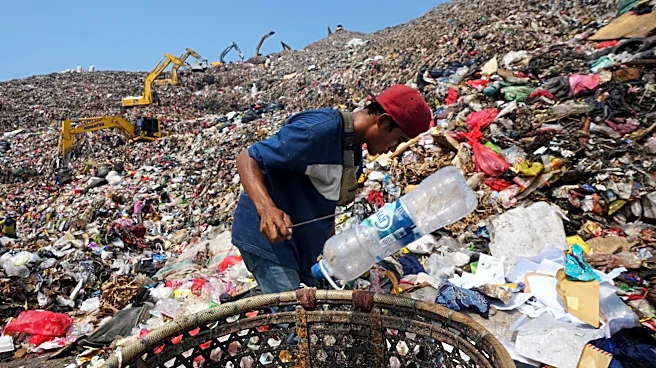
the need to prevent, recover, and responsibly manage waste, highlighting that open burning of waste pollutes the air and microplastics contaminate food, water, and the human body. He also pointed out that dumpsites contribute to water and soil contamination. The Secretary-General advocated for a shift from merely managing waste to actively preventing it, promoting a circular economy, and curbing unchecked methane pollution. He also called for increased financing for cities to enhance waste collection, composting, and circular infrastructure. Additionally, Guterres urged countries to halve global food waste by 2030 and establish a global near-zero methane standard for the oil and gas industry.
Why It's Important?
The push for a global plastics treaty is significant due to the pervasive environmental and health threats posed by plastic pollution. Microplastics, now found in human blood, food, and water, represent a growing concern for public health. The current waste management practices, including open burning and landfills, contribute substantially to air pollution and greenhouse gas emissions, particularly methane, which is a potent contributor to global warming. An ambitious treaty could establish international standards and mechanisms to reduce plastic production, promote recycling, and encourage the development of sustainable alternatives. This would have far-reaching implications for industries reliant on plastic, potentially driving innovation in materials science and waste management technologies. For the U.S., such a treaty could necessitate changes in manufacturing processes, consumer product design, and waste infrastructure, impacting various sectors from packaging to petrochemicals. It also underscores the global interconnectedness of environmental issues, where actions in one region can have worldwide consequences.
What's Next?
The call for an ambitious global treaty to end plastic pollution suggests that international negotiations and policy development will likely intensify. Governments and international bodies will need to convene to discuss the scope, targets, and enforcement mechanisms of such a treaty. This process will involve complex discussions among member states, industry stakeholders, and environmental organizations, each with differing priorities and capabilities. We can anticipate increased pressure on plastic producers to adopt more sustainable practices and on consumers to reduce plastic consumption. Cities may see increased investment in advanced waste management and recycling infrastructure, driven by both international mandates and local initiatives. Furthermore, there may be a push for greater corporate responsibility, holding producers accountable for the lifecycle of their products. The development of a global near-zero methane standard for the oil and gas industry will also be a key area of focus, potentially leading to new regulations and technological advancements in emissions reduction.
Beyond the Headlines
Beyond the immediate policy implications, a global plastics treaty could catalyze a fundamental shift in how societies view and manage resources. It highlights the ethical imperative to protect environmental health for future generations and addresses the disproportionate impact of pollution on vulnerable communities. The emphasis on a circular economy challenges the traditional linear model of 'take-make-dispose,' encouraging systemic changes in production and consumption patterns. This could foster a new era of innovation in sustainable materials, product design for longevity and recyclability, and advanced waste-to-resource technologies. The treaty also underscores the legal and economic responsibilities of nations and corporations in addressing global environmental crises, potentially leading to new legal frameworks for environmental accountability and cross-border cooperation on pollution control. Culturally, it could drive a greater public awareness and demand for eco-friendly products and practices, influencing consumer behavior and corporate social responsibility initiatives worldwide.