



What's Happening?
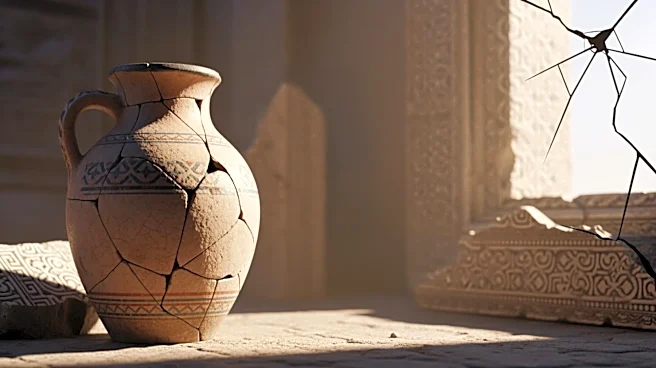
Iran's cultural heritage has suffered significant damage due to ongoing conflict in the Middle East. Key historical sites, including Tehran's Golestan Palace and the Chehel Sotoun Palace, have been severely affected by airstrikes. The Golestan Palace, known
for its ceremonial Hall of the Marble Throne, has seen extensive damage to its mirror-mosaic decorations. Similarly, the Chehel Sotoun Palace has experienced destruction to its ayeneh-kari surfaces and murals depicting royal receptions. The Ali Qapu Palace in Isfahan has also been impacted, with damage to its structural elements and decorative features. These sites are integral to Iran's cultural history, representing centuries of architectural and artistic achievements.
Why It's Important?
The destruction of Iran's cultural heritage sites has profound implications for global heritage preservation. These sites are not only significant to Iran but also to the world, as they represent historical and cultural milestones. The damage threatens the loss of invaluable cultural artifacts and architectural achievements, impacting Iran's cultural identity and heritage tourism. The international community faces ethical challenges in addressing the destruction of cultural sites during conflicts. Preservation efforts require substantial resources and collaboration among global heritage organizations to restore and protect these sites for future generations.
What's Next?
Restoration and preservation efforts for Iran's damaged cultural heritage sites will require international cooperation and significant resources. Organizations like UNESCO may play a crucial role in coordinating efforts to assess and repair the damage. The Iranian government, along with local and international experts, will need to develop strategies to protect remaining sites and prevent further destruction. The involvement of skilled craftspeople and conservators will be essential in restoring the intricate decorations and structural elements of these historical sites.
Beyond the Headlines
The destruction of cultural heritage sites in Iran highlights broader issues of cultural warfare and the moral implications of targeting historical landmarks during conflicts. The preservation of cultural heritage is vital for maintaining cultural diversity and historical continuity. The international community must address the normalization of cultural destruction and work towards safeguarding heritage sites globally. This situation underscores the need for stronger international policies and agreements to protect cultural heritage during times of war.