





What's Happening?
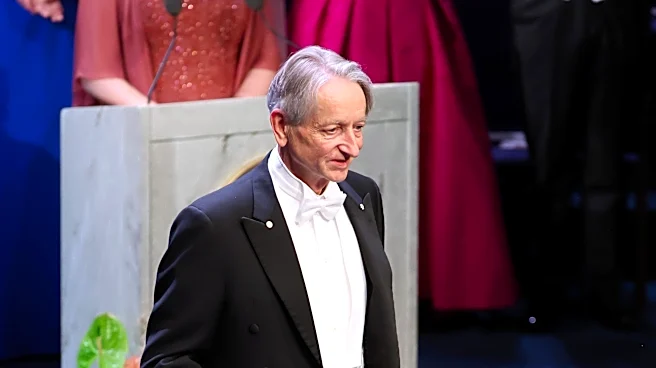
On November 17, the Berggruen Institute awarded its annual US$1 million Berggruen Prize to Thomas Nagel. This award is widely considered the philosophical equivalent of the Nobel Prize. Nagel, an 89-year-old professor emeritus at New York University,
has significantly influenced modern thought across various philosophical domains, including moral philosophy, legal and political theory, metaphysics, and the philosophy of mind. Nicolas Berggruen, chairman of the institute, commended Nagel for his profound 'interrogation of the human experience and for expanding consciousness and our capacity to understand ourselves.' The recognition of Nagel's work comes at a time when many societies are experiencing increasing disillusionment and a decline in trust, leading to a widespread search for meaning. Nagel's extensive career has been dedicated to exploring fundamental questions about human existence and consciousness, making his contributions particularly relevant in the current global climate.
Why It's Important?
The awarding of the Berggruen Prize to Thomas Nagel underscores the enduring relevance of philosophical inquiry in contemporary society. His work, which spans critical areas such as morality, politics, and the nature of consciousness, provides frameworks for understanding complex human experiences. In an era marked by societal disillusionment and declining trust, Nagel's philosophical contributions offer tools for deeper reflection on morality, leadership, and the meaning of existence. This recognition highlights the importance of academic thought in addressing societal challenges and fostering a more profound understanding of the human condition. The prize also brings significant attention to the field of philosophy, potentially encouraging further engagement with critical thinking and ethical considerations among the public and academic communities.
What's Next?
The recognition of Thomas Nagel with the Berggruen Prize is likely to stimulate renewed interest in his extensive body of work and the broader field of philosophy. This could lead to increased academic discourse, new research, and public engagement with the complex questions Nagel has explored throughout his career. Universities and philosophical institutions may organize seminars or discussions centered on his contributions, further disseminating his ideas. The prize also serves as a reminder of the value of deep intellectual inquiry in navigating societal uncertainties, potentially influencing future academic funding and research directions in the humanities. Furthermore, the timing of the award, amidst global disillusionment, suggests a growing societal need for philosophical perspectives to address contemporary challenges.
Beyond the Headlines
Thomas Nagel's receipt of the Berggruen Prize extends beyond a mere academic award; it signifies a broader societal yearning for meaning and understanding in an increasingly complex world. His philosophical explorations into the subjective nature of consciousness, the foundations of morality, and the limits of human knowledge challenge conventional thinking and encourage a more nuanced perspective on existence. This recognition implicitly validates the pursuit of fundamental questions that often lack immediate practical applications but are crucial for intellectual and ethical development. The award also highlights the ongoing dialogue between philosophy and contemporary issues, demonstrating how abstract thought can provide critical insights into real-world problems like declining trust and the search for purpose in modern life. It reinforces the idea that philosophical inquiry remains a vital component of human intellectual progress.