
What's Happening?
India's Polar Satellite Launch Vehicle (PSLV) encountered issues during its return-to-flight mission, marking the second consecutive launch with problems. The PSLV, carrying the EOS-N1 military satellite
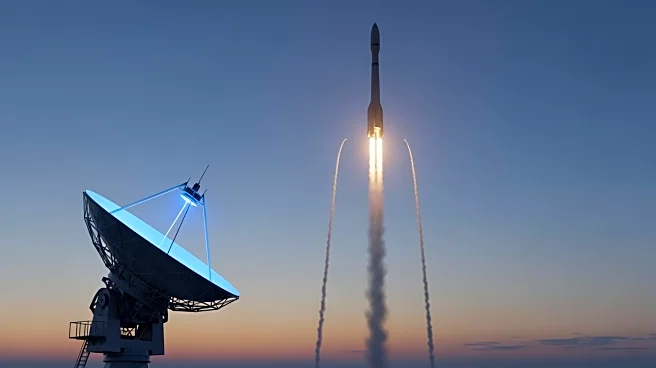
and 15 other payloads, lifted off from the Satish Dhawan Space Centre. Early indications suggest an anomaly occurred near the end of the third stage engine burn, causing deviations in the flight path. This follows a previous failure in May 2025, which resulted in the loss of the EOS-09 satellite. The PSLV has a history of successful launches, including the Chandrayaan-1 lunar probe and the Mars Orbiter Mission. The EOS-N1 satellite, intended for Earth observation, was designed to provide intelligence for the Indian military.
Why It's Important?
The apparent failure of the PSLV rocket impacts India's military satellite capabilities, potentially delaying intelligence-gathering operations. The EOS-N1 satellite was expected to enhance India's surveillance and communication infrastructure. Repeated launch failures could affect the Indian Space Research Organisation's (ISRO) reputation and its ability to secure future international satellite launch contracts. The situation underscores the challenges in maintaining reliability in space missions, which is crucial for national security and technological advancement.
What's Next?
ISRO is analyzing the data from the launch to determine the cause of the anomaly. The organization will likely conduct a thorough investigation to prevent future failures. The outcome of this analysis will be critical for restoring confidence in the PSLV program. Additionally, ISRO may need to adjust its launch schedule and strategies to accommodate the setbacks and ensure the successful deployment of future payloads.
Beyond the Headlines
The repeated issues with the PSLV could prompt a reevaluation of India's space strategy, including potential collaborations with international partners to enhance technological capabilities. The situation also highlights the importance of robust testing and quality assurance processes in space missions. Long-term, these challenges may drive innovations in satellite technology and launch systems to improve reliability and performance.