
What's Happening?
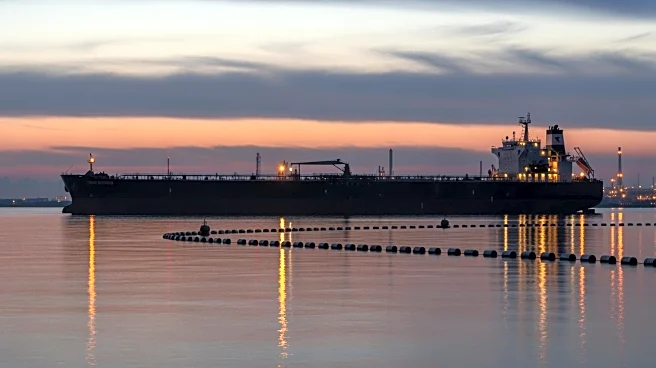
A sanctioned tanker carrying approximately 300,000 barrels of naphtha from Russia has entered Venezuelan waters, according to ship tracking data. This movement comes amid a directive from President Trump,
who has ordered a blockade on all sanctioned oil tankers traveling to and from Venezuela. The blockade has led to significant disruptions, with three other tankers under sanctions either halting their navigation or redirecting their courses in the Atlantic Ocean. This situation highlights the complexities and challenges faced by ship owners as they navigate the geopolitical tensions and sanctions imposed by the U.S. government.
Why It's Important?
The blockade ordered by President Trump is a significant move in the ongoing geopolitical tensions between the U.S. and Venezuela. By targeting oil tankers, the U.S. aims to exert economic pressure on Venezuela, an OPEC member, which relies heavily on oil exports. This action could have broader implications for global oil markets, potentially affecting oil prices and supply chains. Additionally, the blockade underscores the U.S.'s strategic use of sanctions as a tool of foreign policy, which could lead to further diplomatic strains with countries involved in the oil trade with Venezuela, such as Russia.
What's Next?
The immediate future may see increased diplomatic negotiations or retaliatory measures from affected countries. Ship owners and operators will likely continue to adjust their routes and strategies to comply with the sanctions while minimizing economic losses. The international community may also respond, potentially leading to discussions at global forums about the legality and impact of such unilateral sanctions. Monitoring the situation will be crucial for stakeholders in the oil industry and international trade.