
What's Happening?
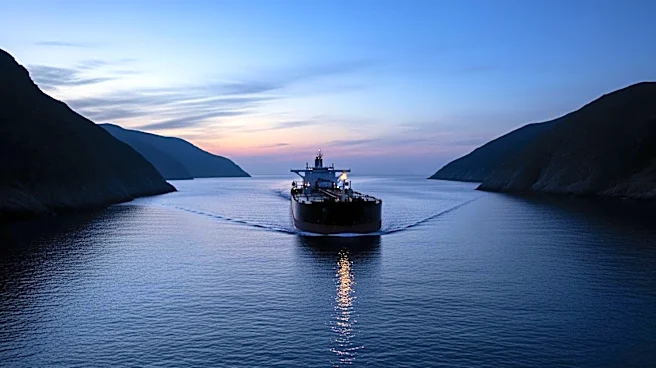
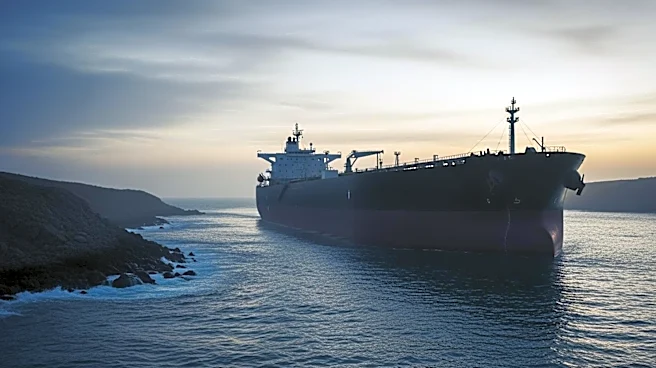
The U.S.-sanctioned tanker Rich Starry, owned by Shanghai Xuanrun Shipping Co, returned to the Strait of Hormuz after failing to bypass a U.S. blockade on vessels calling at Iranian ports. President Trump
announced the blockade following unsuccessful peace talks between the U.S. and Iran. During the blockade's first 24 hours, no ships managed to pass, with several vessels complying with U.S. forces' directions to return to Iranian ports. The Rich Starry, carrying methanol, was among eight ships attempting to cross the waterway. The blockade has created uncertainty for shippers, oil companies, and insurers, with traffic significantly reduced from pre-conflict levels. Iran's crude storage capacity could sustain its current output for two months if exports are halted.
Why It's Important?
The blockade represents a significant escalation in U.S.-Iran tensions, impacting global oil markets and shipping routes. By preventing Iranian oil exports, the U.S. aims to exert economic pressure on Iran, potentially affecting global oil prices and supply chains. The blockade also highlights the geopolitical risks associated with energy transport through strategic chokepoints like the Strait of Hormuz. For China, the sanctions on its shipping company underscore the complexities of navigating international trade amid geopolitical conflicts. The situation may lead to increased insurance costs and operational challenges for companies involved in Middle Eastern oil transport.
What's Next?
The blockade's continuation could lead to further disruptions in global oil supply, prompting countries reliant on Middle Eastern oil to seek alternative sources. The U.S. may face diplomatic challenges as affected countries negotiate to secure energy supplies. Iran might respond by leveraging its crude storage capacity or seeking diplomatic solutions to lift the blockade. The situation could also influence future U.S.-Iran negotiations, with potential implications for regional stability and international energy markets.