







What's Happening?
The U.S. House of Representatives has approved a funding measure to reopen most of the Department of Homeland Security (DHS) after a 75-day shutdown, marking the longest funding lapse in U.S. history. The House passed the measure by voice vote, which
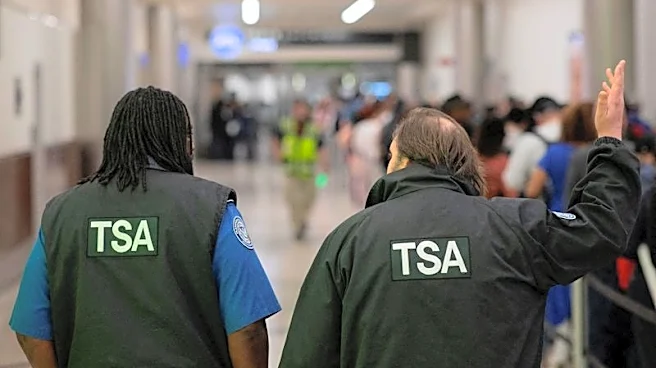
will restore funding to agencies such as the U.S. Coast Guard, Secret Service, Federal Emergency Management Agency, and Transportation Security Administration. However, the funding does not extend to Immigration and Customs Enforcement (ICE) and Customs and Border Protection (CBP), which are expected to be funded through a separate budget resolution. The shutdown had led to significant disruptions, including TSA employees missing paychecks and increased wait times at airports. The measure now awaits President Trump's signature to become effective.
Why It's Important?
The reopening of DHS is crucial for maintaining national security and ensuring the smooth operation of essential services. The shutdown had significant impacts, particularly on TSA operations, leading to increased airport wait times and potential security risks. The decision to fund DHS, excluding immigration enforcement agencies, reflects ongoing political tensions over immigration policy. The separate funding for ICE and CBP indicates a continued debate over border security and immigration enforcement, which remains a contentious issue in U.S. politics. The resolution of this funding issue is vital for restoring normalcy to federal operations and addressing public safety concerns.
What's Next?
The next steps involve the House and Senate working on a separate budget resolution to fund ICE and CBP. This process may involve further negotiations and political maneuvering, as immigration enforcement remains a divisive topic. The outcome will likely influence future immigration policies and funding priorities. Additionally, the House will recess until May 12, while the Senate returns on May 11, potentially delaying further legislative action. The resolution of this funding issue will be closely watched by stakeholders, including federal employees, immigration advocates, and political leaders.