







What's Happening?
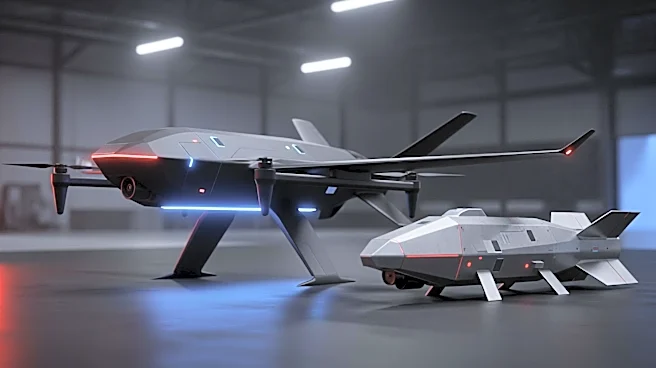
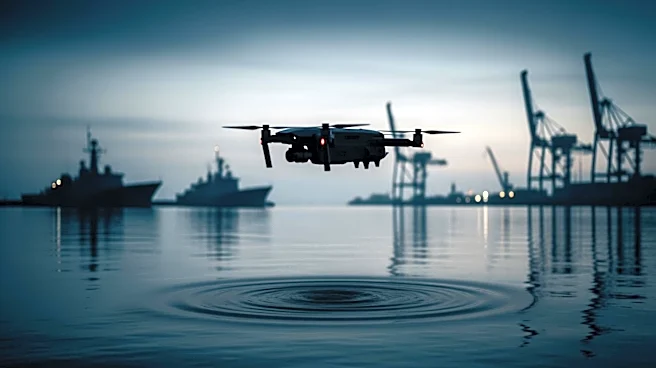
Ukraine is increasingly utilizing AI-enabled drone swarms and uncrewed ground vehicles (UGVs) to target Russian logistics and defend front-line positions. These technologies have been instrumental in disrupting Russian supply chains and have contributed
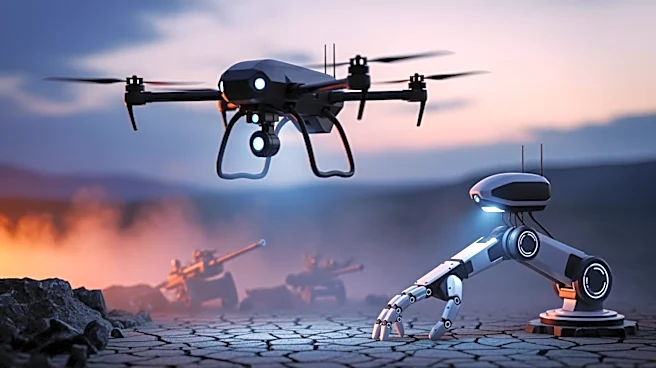
to Ukraine's strategic military efforts. The drones, such as the Hornet, are capable of striking targets up to 150 miles behind enemy lines, effectively cutting off key supply routes. Additionally, Ukraine has begun mass production of low-cost robots like the Legit, which can carry machine guns and are used to replace infantry in certain sectors. These developments are part of a broader strategy to integrate more robotic systems into military operations, with the aim of reducing human casualties and increasing operational efficiency.
Why It's Important?
The deployment of AI-enabled drones and robots by Ukraine represents a significant shift in modern warfare tactics. This approach not only enhances Ukraine's military capabilities but also sets a precedent for future conflicts where technology could play a dominant role. The use of such technologies allows for more efficient resource allocation and minimizes human risk, which is crucial for Ukraine given its numerical disadvantage against Russian forces. The success of these systems could influence other nations to adopt similar technologies, potentially leading to a new era of warfare where machines play a central role. This shift also raises ethical and strategic questions about the future of military engagements and the role of human soldiers.
What's Next?
Ukraine plans to continue expanding its use of robotic systems, with President Volodymyr Zelensky announcing intentions to increase UGV production significantly. The focus will likely be on enhancing the capabilities of these machines for offensive operations, despite current mobility challenges. As these technologies evolve, they may become more autonomous, raising further ethical considerations. The international community will be watching closely to see how these developments impact the dynamics of the conflict and whether they lead to broader adoption of similar technologies by other countries.
Beyond the Headlines
The integration of AI and robotics into military operations could have long-term implications beyond the immediate conflict. It may lead to a reevaluation of military strategies globally, as nations consider the benefits and risks of deploying autonomous systems. The ethical challenges associated with AI in warfare, such as decision-making without human intervention, will likely become a topic of international debate. Additionally, the economic impact of mass-producing such technologies could influence defense industries and labor markets, as the demand for skilled operators and developers increases.