
What's Happening?
Students at the University of Arizona are receiving comprehensive training for careers in agriculture, integrating modern technology with traditional livestock management. The Campus Agricultural Center,
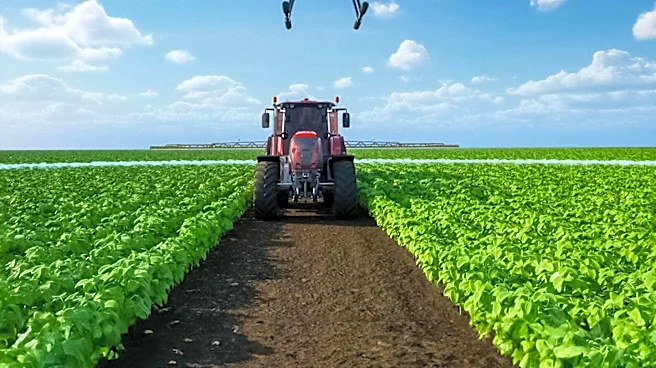
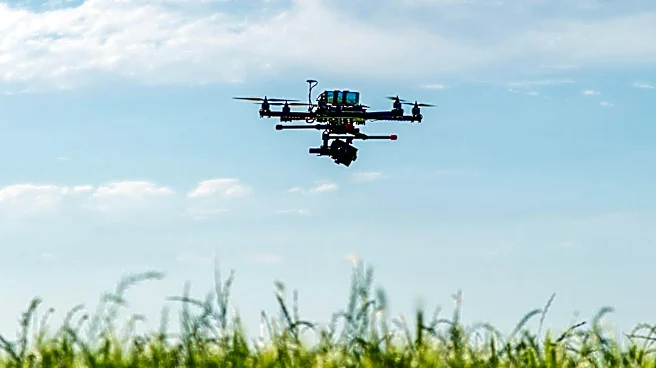
located within Tucson city limits, functions as both a classroom and a research laboratory. Students are learning a wide range of skills, from basic livestock care, such as haltering horses, to advanced technological applications like flying drones, remote sensing, and utilizing machine learning and AI imaging. Brett Blum, interim director of the Arizona Experiment Station Network, emphasized that these skills are designed to make students 'industry-ready.' The program also incorporates virtual fencing technology for cattle at the university's experimental range in Santa Rita, which uses collars with stimuli to manage herds and collect up to 16 million data points annually on resource utilization. Additionally, the Wildcat Country Market on campus sells meat produced and processed by students, offering a farm-to-customer experience.
Why It's Important?
This innovative training program is crucial for addressing the evolving needs of the U.S. agricultural sector, which faces labor shortages and increasing demands for efficiency and sustainability. By equipping students with skills in AI, drones, and data analytics alongside traditional animal husbandry, the University of Arizona is preparing a workforce capable of navigating the complexities of modern agriculture. The integration of technology like virtual fencing not only enhances livestock management but also provides valuable data for optimizing resource use, contributing to more sustainable farming practices. The Wildcat Country Market component offers students practical experience in the entire agricultural value chain, from production to sales, fostering entrepreneurial skills. This approach ensures that the next generation of agricultural leaders is well-versed in both the practical and technological aspects of the industry, making them highly competitive and effective in a rapidly changing global food system.
What's Next?
The University of Arizona's program is expected to continue expanding its integration of cutting-edge technology into agricultural education. As artificial intelligence and drone technology advance, the curriculum will likely evolve to incorporate newer applications and methodologies for livestock management, crop monitoring, and data analysis. The program's success in producing 'industry-ready' graduates may serve as a model for other agricultural institutions across the U.S., potentially leading to broader adoption of similar tech-integrated training initiatives. Furthermore, the data collected from virtual fencing and other AI applications could contribute to ongoing research in sustainable agriculture and animal welfare, influencing future farming practices. The Wildcat Country Market will likely continue to provide hands-on business experience for students, potentially expanding its product offerings or market reach as the program grows.
Beyond the Headlines
The University of Arizona's initiative highlights a broader shift in the perception and practice of agriculture, moving it from a purely manual labor-intensive field to one that is increasingly reliant on technology and data science. This transformation has significant implications for rural development and workforce demographics, potentially attracting a more diverse group of students, including those from urban backgrounds, as noted by Emily Bluhm. The emphasis on AI to address labor shortages, rather than replace workers, underscores a critical ethical consideration in technological advancement: how to augment human capabilities without displacing jobs. This program also serves as a vital bridge between academic research and practical application, demonstrating how universities can directly contribute to solving real-world industry challenges. The focus on local food systems, exemplified by the Wildcat Country Market, also promotes community engagement and consumer awareness about the origins of their food.