
What's Happening?
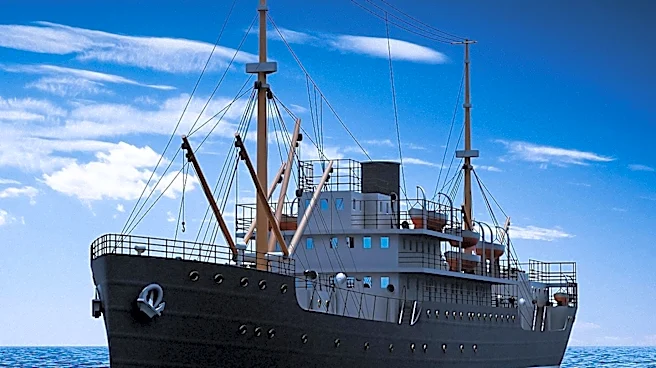
A documentary titled 'Journey to the Sea of Cortez' chronicles the 1940 expedition of author John Steinbeck and marine biologist Ed Ricketts. The two embarked on a voyage to the Sea of Cortez, also known
as the Gulf of California, during a pivotal historical period—the height of World War II in Europe and on the eve of the attack on Pearl Harbor. Their journey was driven by a quest to gain a deeper understanding of humanity's relationship with the natural world. The documentary, released in 2012, has received a rating of 4.7 out of 5 stars and runs for 52 minutes, falling under the documentary genre.
Why It's Important?
This documentary is important as it sheds light on a significant historical and scientific collaboration that produced the book 'Sea of Cortez: A Leisurely Journal of Travel and Research.' The expedition's timing, amidst global conflict, underscores a timeless human need to connect with and understand nature, even during periods of immense societal upheaval. Ed Ricketts' pioneering work in marine biology and ecology, combined with Steinbeck's literary prowess, created a unique interdisciplinary approach to environmental observation. The film's exploration of their journey can inspire contemporary efforts to preserve the Sea of Cortez, a region renowned for its rich biodiversity, and contribute to broader discussions about the conservation of global ocean biospheres. It highlights the enduring relevance of their work in fostering environmental awareness and stewardship.
What's Next?
While the documentary itself is a retrospective look at a historical event, its continued availability and positive reception suggest an ongoing interest in the themes it explores. The film's potential to inspire new conservation efforts for the Sea of Cortez and the global oceans indicates its role as an educational tool. Future initiatives could involve using the documentary in educational settings to promote marine biology, environmental science, and the interdisciplinary study of nature and literature. Conservation organizations might leverage the film to raise awareness and garner support for protecting the Gulf of California's unique ecosystem. The legacy of Steinbeck and Ricketts' expedition, as presented in the documentary, continues to serve as a foundation for understanding and advocating for marine conservation.
Beyond the Headlines
The 'Journey to the Sea of Cortez' delves into profound ethical and cultural dimensions by examining humanity's place within the natural world. Steinbeck and Ricketts' expedition was not merely a scientific endeavor but a philosophical one, questioning the impact of human actions on ecosystems and the interconnectedness of all life. The documentary implicitly raises questions about the long-term shifts in environmental perception and policy since 1940. It encourages viewers to reflect on how our relationship with nature has evolved, or devolved, in the face of modern industrialization and climate change. The film serves as a cultural touchstone, reminding us of the intellectual and emotional depth required to truly appreciate and protect our planet's biodiversity, fostering a sense of responsibility that transcends scientific data.