







What's Happening?
Lincoln University of Missouri (LU) researchers are collaborating with Midwest farmers on the 'From the Ground Up' project, an initiative focused on evaluating climate-smart agricultural practices under real-world farming conditions. This multi-institution
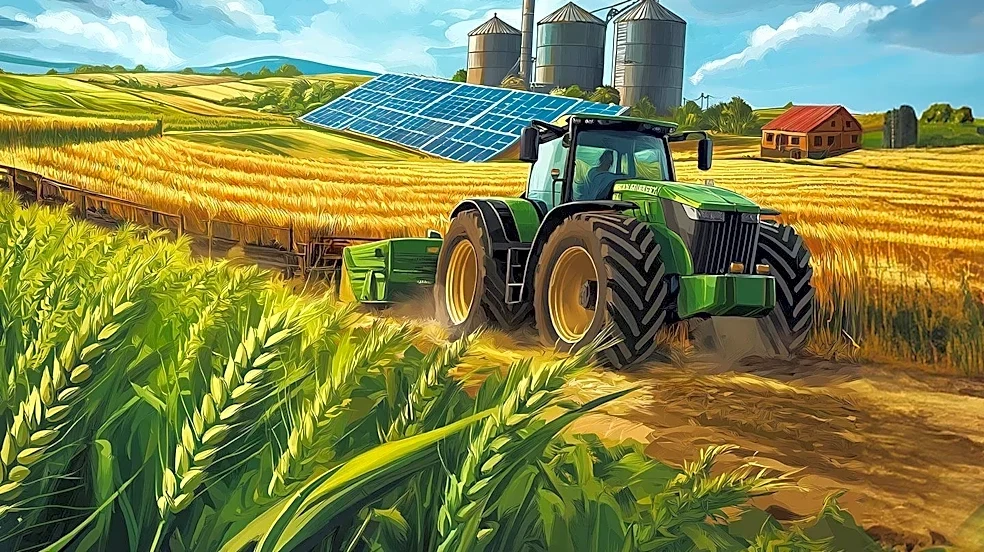
project, funded by the U.S. Department of Agriculture's Agriculture and Food Research Initiative, aims to improve soil health, support livestock production, and strengthen farm sustainability. The research addresses the challenge of translating university test plot results to working farms by directly partnering with producers. Mohan Acharya, a state Extension specialist in LU's Small Ruminant Program, is part of the research team. The project involves 'nodes,' which are groups of six to eight farmers in specific areas who conduct field trials with scientists. For instance, ranchers in the Southwest Missouri Grazing Node are testing four soil treatments on pastures to assess their effects on soil health, pasture yield, and forage quality. Another focus is on the impact of grazing livestock on cover crops and crop residue, measuring livestock weight gain, animal health, soil conditions, cover crop performance, and economic outcomes.
Why It's Important?
This project is crucial for U.S. agriculture as it bridges the gap between academic research and practical farming applications, directly addressing the reluctance of many farmers to adopt climate-smart practices despite their proven benefits. By conducting trials on working farms, the 'From the Ground Up' initiative provides data that is directly relevant and applicable to producers, increasing the likelihood of adoption. The findings will help farmers make informed decisions that can improve their land, enhance agricultural productivity, and boost farm profitability. This approach is vital for the long-term sustainability of the agricultural sector, especially in the Midwest, by promoting healthier soils, storing carbon, and reducing greenhouse gas emissions. Furthermore, the project's involvement with LU's Extension program ensures that research findings are disseminated to local agricultural advisors and landowners, and can inform national agricultural programs and markets designed to encourage sustainable farming practices.
What's Next?
The 'From the Ground Up' project will continue its on-farm research, with findings from the pasture trials and cover crop studies being evaluated to determine the effectiveness and economic viability of various climate-smart practices. The project's educational component, the Undergraduate Integrated Internship Program, will also proceed, offering paid summer research experience to 12 interns annually over four years. These interns will then design hands-on agriculture lessons for high school classrooms, particularly those with many minority students, to foster interest in agricultural research and STEM fields. The ongoing collaboration between LU, other universities, and non-profit organizations is expected to strengthen connections between agricultural research, Extension education, and the communities they serve, translating scientific knowledge into practical information for producers and supporting the next generation of agricultural professionals.
Beyond the Headlines
The 'From the Ground Up' project highlights a deeper shift in agricultural research towards more collaborative and community-engaged models. By directly involving farmers in the research process, the initiative not only generates more relevant data but also builds trust and facilitates knowledge exchange, which are critical for widespread adoption of new practices. This approach acknowledges the invaluable experiential knowledge of farmers and integrates it with scientific expertise, creating a more holistic understanding of agricultural systems. The project also addresses the ethical dimension of agricultural sustainability, recognizing that environmental stewardship and economic viability must go hand-in-hand for farmers to embrace change. The focus on educational opportunities for students, particularly those from underrepresented groups, underscores a commitment to diversifying the agricultural workforce and ensuring that future generations are equipped to tackle complex challenges in food production and environmental management.