


What's Happening?
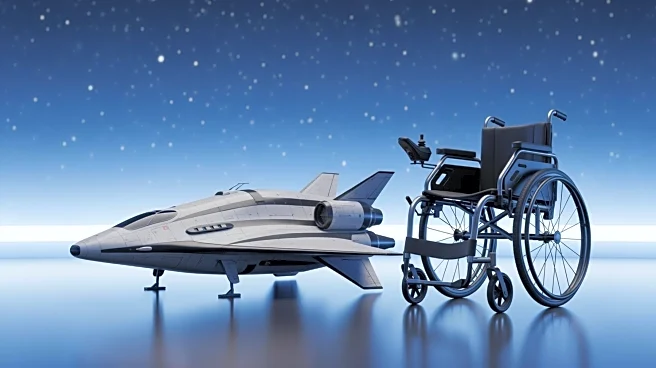
Blue Origin is preparing for its NS-37 flight, which will include Michaela 'Michi' Benthaus, set to become the first wheelchair user in space. Benthaus, who became wheelchair-bound after a spinal cord injury in 2018, has been involved in accessibility
experiments in microgravity through AstroAccess, a project aimed at promoting disability inclusion in space exploration. The upcoming flight is part of a broader effort to demonstrate that space travel can be accessible to people with disabilities. AstroAccess has conducted several microgravity missions to test and develop methods for differently-abled individuals to navigate and secure themselves in space environments.
Why It's Important?
This development is significant as it represents a step towards inclusivity in space exploration, challenging traditional barriers faced by individuals with disabilities. By including a wheelchair user in a space mission, Blue Origin and AstroAccess are setting a precedent for future space travel, potentially opening opportunities for a more diverse range of participants. This could influence policies and practices within the aerospace industry, encouraging other organizations to consider accessibility in their missions. The initiative also highlights the importance of equal opportunity in scientific and exploratory fields, potentially inspiring similar efforts in other sectors.
What's Next?
The NS-37 flight does not yet have a set launch date, but its success could lead to more inclusive space missions. Stakeholders in the aerospace industry may respond by increasing investments in accessibility technologies and programs. Additionally, the outcome of this mission could influence future policies at space agencies like NASA and ESA, potentially leading to more inclusive astronaut selection processes. The broader impact on society could include increased awareness and advocacy for disability rights and inclusion in various fields.