
What's Happening?
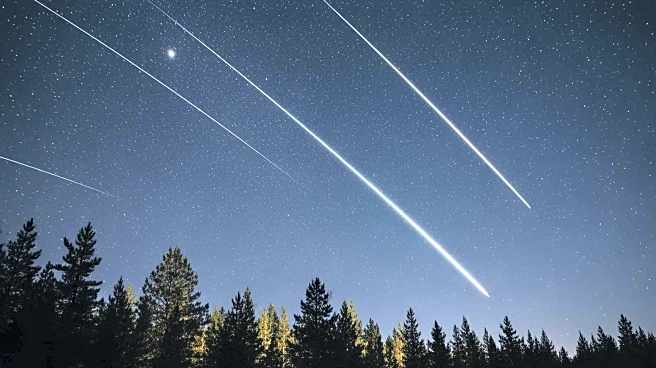
The Geminid meteor shower, one of the most anticipated astronomical events of the year, is set to peak on the night of December 13-14, 2025. This meteor shower is renowned for its prolific display, with
viewers potentially witnessing up to 150 meteors per hour under optimal conditions. The Geminids originate from the debris trail of 3200 Phaethon, a celestial body with characteristics of both asteroids and comets. As Earth passes through this debris, the particles enter the atmosphere, creating bright streaks across the sky. The radiant point of the Geminids is located near the constellation Gemini, making it a visually stunning event. This year, the waning crescent Moon will minimize light interference, enhancing visibility for observers.
Why It's Important?
The Geminid meteor shower offers a unique opportunity for both amateur and professional astronomers to observe and study meteors. Its high visibility and frequency make it an ideal event for educational outreach and public engagement in astronomy. The shower's occurrence during a waning crescent Moon phase means less light pollution, allowing for clearer observations. This event also highlights the importance of understanding celestial mechanics and the interactions between Earth and other celestial bodies. For the general public, it provides a chance to connect with the natural world and appreciate the wonders of the universe.
What's Next?
Following the Geminid meteor shower, the next major meteor event will be the Quadrantids, peaking on January 2, 2026. However, the full Moon during this period may hinder visibility. As such, the Geminids represent the best opportunity for meteor observation until the Lyrids in April 2026. Observers are encouraged to find locations with minimal light pollution and clear skies to maximize their viewing experience. Astronomers and enthusiasts alike will continue to monitor meteor activity and share findings to enhance public understanding and appreciation of these celestial events.