







What's Happening?
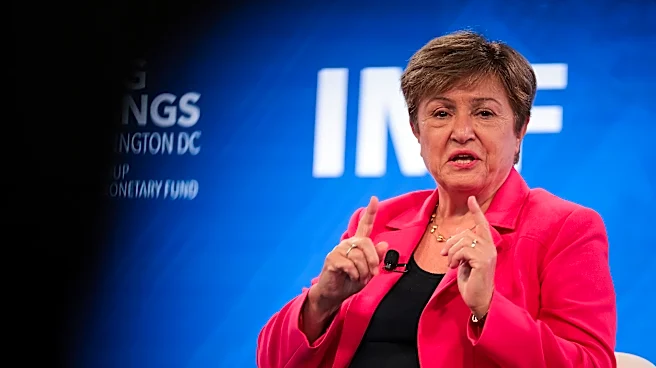
Syed Naveed Qamar, former federal minister and chairman of the National Assembly standing committee on Finance, has warned that Pakistan may enter another International Monetary Fund (IMF) program after its current arrangement concludes in September 2027.
Speaking at the SDPI 29th sustainable development conference, Qamar expressed concerns that the upcoming general elections, approximately 18 months after the current IMF program's expected end, could lead to increased government spending and a reversal of economic discipline. He emphasized that Pakistan faces potential renewed economic instability unless the government utilizes the remaining period of the IMF program to establish a sustainable growth framework and implement structural reforms. Qamar suggested that the country might transition directly from the existing arrangement into a new IMF program rather than achieving economic independence. He urged the government to leverage the current program to build institutional and policy frameworks for sustainable growth, cautioning against delaying this transition to avoid a disorderly economic adjustment.
Why It's Important?
This warning highlights the persistent economic challenges faced by Pakistan and the potential for political cycles to undermine long-term stability. The prospect of another IMF program suggests a continued reliance on external financial assistance, which can impose austerity measures and structural reforms that impact the populace. For the U.S. and international financial institutions, Pakistan's economic trajectory is significant due to its strategic geopolitical position and the broader implications for regional stability. A return to economic instability could necessitate further international intervention, potentially drawing in more resources and diplomatic efforts. The interplay between political pressures, government spending, and economic discipline, particularly in the context of upcoming elections, underscores the difficulty of implementing consistent economic policies in developing nations. This situation could affect U.S. foreign policy considerations regarding aid and partnerships in the region.
What's Next?
The immediate focus for Pakistan's government will be to utilize the remaining period of the current IMF program to implement structural reforms and establish a sustainable growth framework. This includes addressing issues such as energy sector deregulation, improving the education system, and managing fiscal discipline. As the next general elections approach, there will be increased scrutiny on government spending and policy decisions to ensure they do not jeopardize economic stability. International bodies, including the IMF, will likely monitor Pakistan's progress closely, and their assessments will influence future engagement. The government will need to balance political imperatives with the necessity of economic reform to avoid a potential return to a more restrictive IMF program. Discussions around fiscal policy, energy sector reforms, and educational overhauls are expected to intensify in the coming months.
Beyond the Headlines
The situation in Pakistan reflects a broader challenge faced by many developing economies: balancing democratic processes with the need for long-term economic stability. The warning from Syed Naveed Qamar points to the cyclical nature of economic crises and external interventions when fundamental structural issues are not adequately addressed. The 'voting with their pockets' phenomenon in the energy sector, where consumers are shifting to alternatives like solar power due to inefficiencies, illustrates a grassroots response to systemic failures. This highlights the importance of market-driven solutions and deregulation over centralized, often inefficient, state control. The call for an overhaul of the education system to focus on vocational training and practical skills also underscores a critical need for human capital development to support sustainable economic growth, moving beyond outdated curricula that produce a workforce ill-equipped for modern economic demands. The ethical dimension lies in ensuring that economic reforms benefit all segments of society and do not disproportionately burden the most vulnerable.