

What's Happening?
The U.S. Department of State has issued an emergency travel warning for Mali, advising American citizens to restrict all non-essential movement in the capital, Bamako. This alert comes in response to escalating insurgent violence, particularly from the al-Qaeda-affiliated
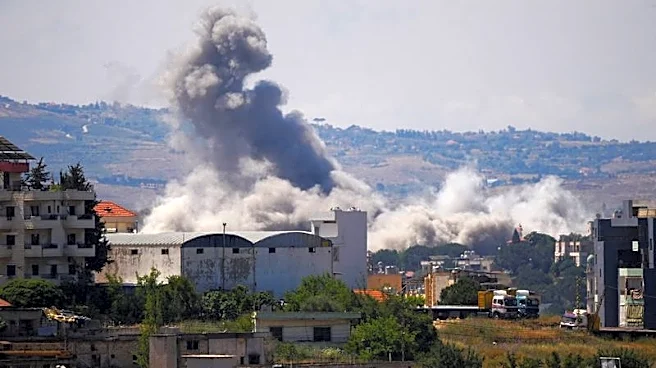
group JNIM, which has launched coordinated attacks on key cities, including Bamako. These attacks have disrupted strategic infrastructure, including the main international airport and military garrison town of Kati. The insurgents have established choke points along major highways, leading to the destruction of commercial cargo and disruption of vital transit routes. This has resulted in severe shortages of petroleum, medical supplies, and food, exacerbating the humanitarian crisis in the region.
Why It's Important?
The security alert highlights the deteriorating situation in Mali, which poses significant risks to regional stability and international interests. The disruption of trade routes and shortages of essential goods could lead to a humanitarian crisis, affecting millions of residents in urban areas. The situation also underscores the vulnerability of the ruling military junta and the potential for further destabilization in the Sahel region. The U.S. alert is a critical reminder of the global impact of extremist violence, as Mali ranks high on the Global Terrorism Index. This development could influence U.S. foreign policy and military strategy in the region, as well as international humanitarian efforts.
What's Next?
The U.S. Embassy in Mali is urging citizens to avoid public gatherings and prepare emergency plans, including securing food, water, and communication supplies. The situation may prompt further international diplomatic and military responses, including potential evacuations and increased humanitarian aid. The ongoing conflict could also lead to heightened security measures and counter-terrorism operations in the region. International stakeholders, including neighboring countries and global powers, may need to reassess their strategies to address the growing threat of extremism in the Sahel.