
What's Happening?
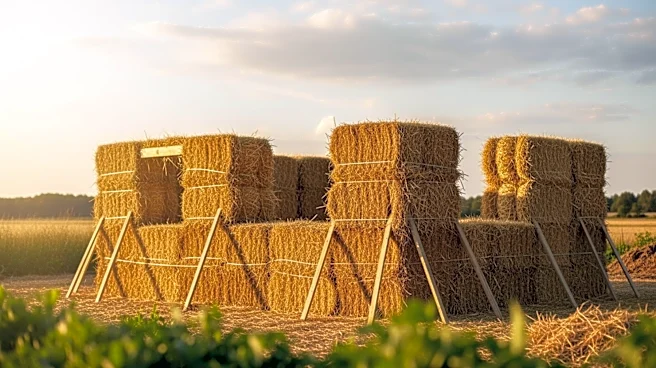
A nonprofit organization in Santa Cruz County, California, is addressing the affordable housing crisis by constructing homes using straw bales. Just Places, in partnership with People First, plans to build
a 'straw bale village' on the property of Mount Calvary Lutheran Church in Soquel. This initiative aims to provide permanent, green housing for individuals transitioning out of homelessness. The project will replace six uninhabitable cabins with six tiny homes and several studio, one-, and two-bedroom apartments. The straw bale construction method, which dates back to the 19th century, is known for its durability and environmental benefits. The homes are expected to be LEED-certified and solar-powered, with construction potentially completed in four to six months if the necessary $300,000 funding is secured.
Why It's Important?
This project is significant as it addresses two critical issues: the lack of affordable housing and the need for sustainable building practices. With the median home price in the area at $1.95 million, many residents are priced out of homeownership. The use of straw bales, an agricultural byproduct, offers a cost-effective and environmentally friendly solution. Straw bale homes are energy-efficient, providing up to 75% savings on heating and cooling costs, and have a high fire resistance. Additionally, these homes are carbon negative, storing more carbon dioxide than they emit, which contributes to reducing overall carbon emissions. This approach not only provides housing for those in need but also promotes sustainable construction practices.
What's Next?
The success of this project could pave the way for broader adoption of straw bale construction in the U.S., particularly in areas facing similar housing and environmental challenges. If the funding goal is met, construction could begin soon, setting a precedent for other communities to follow. The project may also inspire further innovations in green building techniques and materials, potentially influencing policy changes that support sustainable housing solutions. As awareness of the benefits of straw bale construction grows, it could lead to increased demand for such homes, encouraging more builders to explore this method.
Beyond the Headlines
The use of straw bales in construction highlights a shift towards more sustainable and environmentally conscious building practices. This method not only addresses immediate housing needs but also contributes to long-term environmental goals by reducing carbon emissions. The project underscores the potential for agricultural waste products to be repurposed in innovative ways, reducing reliance on traditional building materials that contribute to environmental degradation. As climate change concerns intensify, such initiatives could become increasingly important in shaping future construction standards and practices.