

What's Happening?
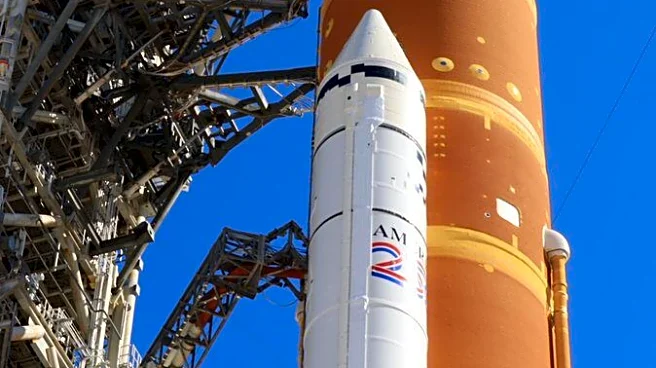
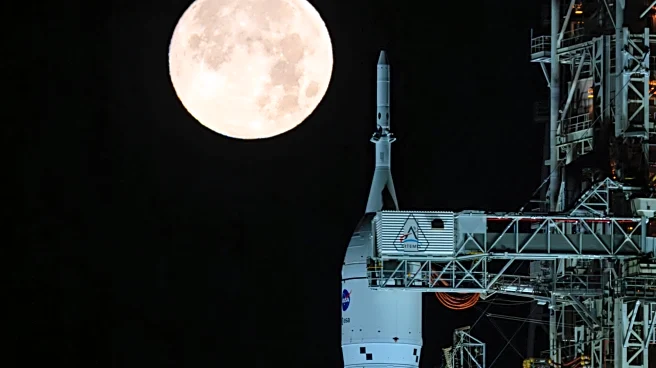
NASA has announced that the Artemis II mission, which aims to send four astronauts on a lunar fly-around, is scheduled for March 6, 2026. This decision follows successful fueling tests of the Space Launch System (SLS) rocket at Kennedy Space Center. The
mission will include three American astronauts and one Canadian, who will undergo a mandatory two-week health quarantine before the launch. The Artemis II mission builds on the success of the uncrewed Artemis I mission in 2022 and will be the first crewed mission to the Moon in over 50 years. The mission is expected to last 10 days, during which the astronauts will not land on the Moon but will conduct a fly-around.
Why It's Important?
The Artemis II mission is a significant step in NASA's long-term goal of establishing a sustainable human presence on the Moon. It represents a critical milestone in the Artemis program, which aims to return humans to the lunar surface and eventually pave the way for human exploration of Mars. The successful completion of this mission will demonstrate NASA's ability to conduct deep space missions with human crews, potentially opening new opportunities for scientific research and international collaboration. The mission also holds geopolitical significance, as it reinforces the United States' leadership in space exploration and technology.
What's Next?
Following the successful fueling tests, NASA will conduct a flight readiness review to ensure all systems are prepared for the March launch. The astronauts will begin their quarantine period to minimize health risks before the mission. NASA has a five-day launch window in March, and if the mission is delayed, the next opportunity will be in April. The agency will continue to analyze data from the fueling tests to address any remaining issues and ensure the safety of the crew. The Artemis II mission will set the stage for future Artemis missions, including Artemis III, which aims to land astronauts on the Moon's surface.