




What's Happening?
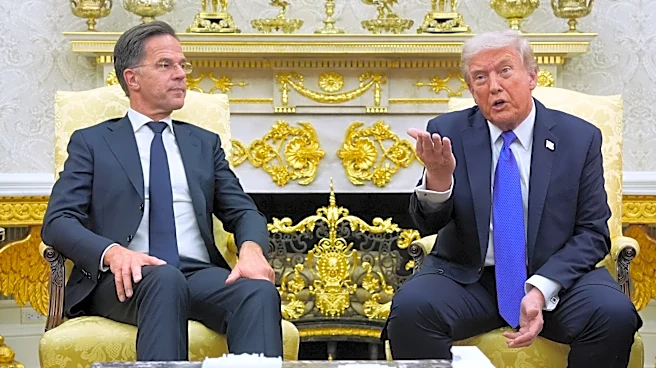
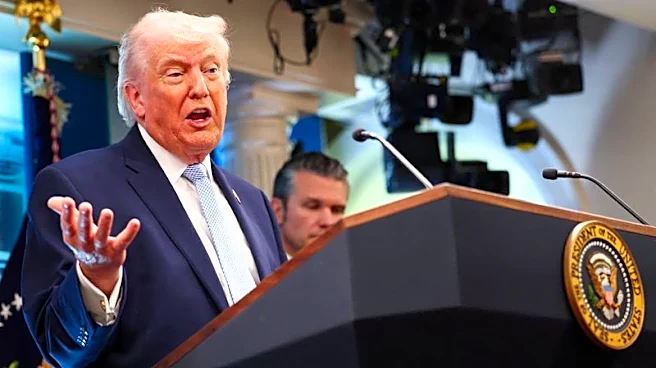
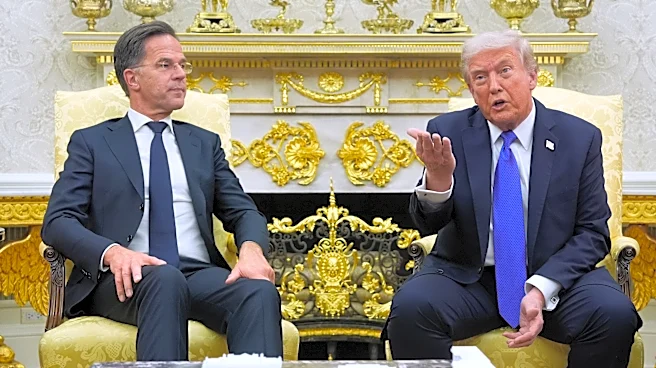
President Trump has expressed dissatisfaction with NATO allies over their perceived lack of support in the U.S. conflict with Iran. Despite his criticisms, public opinion polls indicate strong American support for NATO. An AP-NORC poll showed that 70%
of Americans view NATO membership as beneficial, the highest level of support since 2022. Trump has suggested withdrawing U.S. troops from uncooperative NATO countries, although legal constraints make a full withdrawal unlikely. The president's rhetoric appears aimed at pressuring NATO to assist the U.S. in its dealings with Iran, where a fragile truce is currently in place.
Why It's Important?
The ongoing tension between President Trump and NATO could have significant implications for international relations and U.S. foreign policy. While public support for NATO remains robust, Trump's actions and statements may strain alliances and impact global perceptions of U.S. leadership. The situation highlights the complexities of maintaining international alliances amidst unilateral foreign policy decisions. The potential withdrawal of U.S. troops from certain NATO countries could weaken the alliance's collective defense capabilities and alter the geopolitical balance in regions like Europe and the Middle East.
What's Next?
As the situation with Iran evolves, further developments in U.S.-NATO relations are expected. Congress has implemented measures to prevent a unilateral withdrawal from NATO, but Trump's administration may explore other ways to exert pressure on the alliance. The outcome of these tensions could influence future U.S. foreign policy and defense strategies, particularly in relation to Iran and other global conflicts. Stakeholders within NATO and the U.S. government will likely continue to navigate these challenges to maintain stability and cooperation.