




What's Happening?
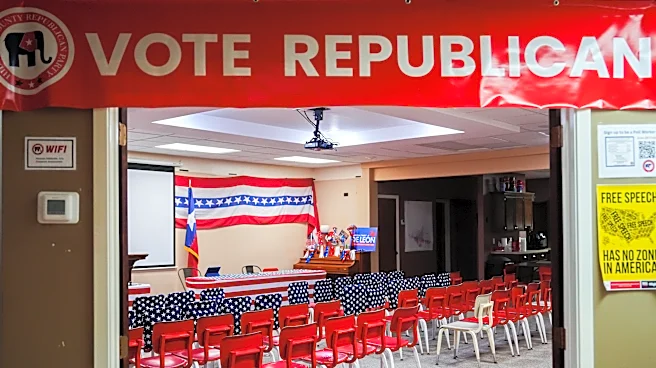
Senator John Fetterman (D-PA) has reportedly engaged a Republican-aligned fundraising firm, Blitz Digital Group, to cultivate a new base of conservative donors. This arrangement, detailed by The Atlantic, involves right-wing groups potentially receiving
up to 75% of an initial donation generated through Fetterman's appeals. Private messages obtained by The Atlantic show Blitz Digital Group actively pitching Fetterman's fundraising copy to conservative political organizations, with one account associate noting its high performance. The appeals, signed by Fetterman, were reportedly tailored to voters sympathetic to President Trump, using subject lines like 'I'm always going to reject Socialism and the anti-American way of life.' Donations processed through Anedot, a firm commonly used by Republicans. Despite these actions, Fetterman has consistently denied any intention of formally joining the Republican Party, even as his relationship with the progressive wing of his own party has become strained over issues like Israel and the Iran war. This fundraising strategy follows the termination of his relationship with Democratic digital fundraising firm MissionWired in June and the formation of a joint fundraising committee with Senator Dave McCormick (R-PA).
Why It's Important?
This development is significant as it highlights a unique cross-party fundraising strategy employed by a prominent Democratic senator. Senator Fetterman's decision to work with a Republican-aligned firm and target conservative donors could signal a shift in how political campaigns seek funding, potentially blurring traditional party lines in fundraising efforts. The reported offer of a 75% split to conservative organizations for initial donations suggests an aggressive approach to donor acquisition, which could influence future campaign finance models. For the Democratic Party, Fetterman's actions, coupled with his increasingly strained relations with progressive factions, could indicate internal divisions and a potential re-evaluation of party unity and messaging, particularly on foreign policy issues. Conversely, for Republicans, the circulation of Fetterman's appeals by figures like Senator Mike Lee (R-UT) to suggest a potential party switch, even if rejected by Fetterman, demonstrates an opportunistic attempt to capitalize on perceived ideological alignment and potentially draw support away from the Democratic Party. This move could also set a precedent for other politicians to explore unconventional fundraising avenues, impacting the broader landscape of political financing and inter-party dynamics.
What's Next?
The continued use of a Republican-aligned fundraising firm by Senator Fetterman is likely to draw further scrutiny from both within his own party and from political observers. It remains to be seen how this strategy will impact his standing with the Democratic Party's progressive wing and his overall political image. There may be increased pressure on Fetterman to clarify his long-term political alignment and his fundraising practices. Other politicians, observing Fetterman's approach, might consider similar cross-party fundraising tactics, potentially leading to a broader trend of unconventional campaign finance strategies. The effectiveness of this strategy in generating significant conservative donations for a Democratic senator will also be closely watched, as it could influence future campaign models. Furthermore, the ongoing dialogue around Fetterman's political leanings, particularly concerning issues like Israel and the Iran war, will likely continue to shape his public perception and his relationships within the Senate.
Beyond the Headlines
Senator Fetterman's fundraising approach raises deeper questions about the evolving nature of political identity and party loyalty in the U.S. political landscape. By actively seeking financial support from conservative donors while maintaining his Democratic affiliation, Fetterman challenges traditional notions of partisan boundaries and ideological purity. This could reflect a growing pragmatism among some politicians who prioritize securing resources over strict adherence to party dogma, or it could indicate a strategic effort to appeal to a broader, more diverse electorate. The ethical implications of a Democratic senator using a Republican-aligned firm that offers a significant commission to conservative groups for donor acquisition also warrant consideration. This practice could be seen as a transactional approach to politics, where financial gain potentially overshadows ideological consistency. Moreover, the situation highlights the increasing fluidity of political alliances and the potential for individual politicians to carve out unique positions that defy easy categorization, potentially leading to a more complex and less predictable political environment.