






What's Happening?
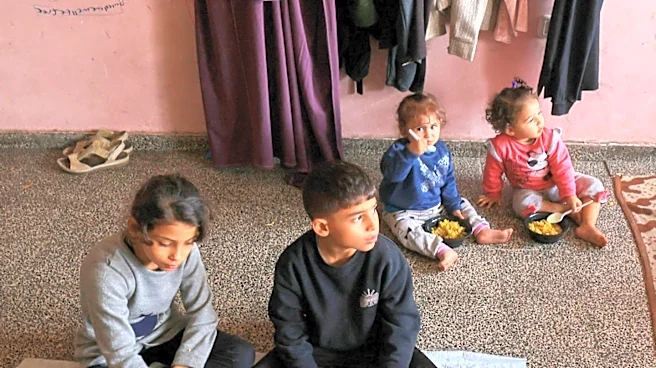
The King Salman Humanitarian Aid and Relief Center (KSrelief) has distributed 24,800 hot meals to vulnerable families in central and southern Gaza. This initiative, which benefited 24,800 individuals, is part of the Saudi popular campaign dedicated to supporting
the Palestinian people in the Gaza Strip. The meals were prepared and distributed through a central kitchen operated by KSrelief. These efforts are designed to address the immediate nutritional needs of affected families and bolster their resilience amidst the ongoing humanitarian crisis in the region. The distribution underscores Saudi Arabia's commitment to providing essential aid to those impacted by the conflict.
Why It's Important?
The delivery of 24,800 hot meals by KSrelief is a critical intervention in a region facing severe food insecurity and humanitarian challenges. The provision of hot meals offers immediate relief and sustenance to vulnerable families, many of whom are struggling to access basic necessities. This aid helps to mitigate the effects of displacement and economic hardship, which have been exacerbated by the current crisis. The involvement of a national humanitarian center like KSrelief highlights the role of state-backed organizations in large-scale relief efforts. Such initiatives are vital for maintaining a baseline level of support for populations in distress, preventing further deterioration of living conditions, and offering a measure of stability in an otherwise volatile environment. The focus on central and southern Gaza indicates a targeted approach to areas with significant need.
What's Next?
The King Salman Humanitarian Aid and Relief Center is expected to continue its humanitarian and relief efforts as part of the Saudi popular campaign to support Palestinians in Gaza. These initiatives are likely to include further distributions of food, medical supplies, and other essential aid to address the ongoing needs of the population. The center's sustained presence and operations suggest a long-term commitment to alleviating the humanitarian crisis. The effectiveness of these efforts will depend on continued funding, logistical access, and the ability to navigate the complex operational environment in Gaza. The broader international community will also continue to monitor the humanitarian situation and the impact of such aid distributions.
Beyond the Headlines
This aid delivery reflects a broader pattern of humanitarian diplomacy and regional engagement. Saudi Arabia, through KSrelief, is demonstrating its commitment to humanitarian causes in the Middle East, which can have implications for its regional standing and influence. The provision of aid, while addressing immediate needs, also subtly reinforces diplomatic ties and can be seen as a soft power projection. The logistical challenges of distributing aid in Gaza, particularly hot meals, highlight the intricate coordination required between international and local actors. Furthermore, the reliance on external aid underscores the fragility of the local infrastructure and economy, emphasizing the need for sustainable solutions beyond emergency relief to foster long-term recovery and self-sufficiency for the affected population.