









What's Happening?
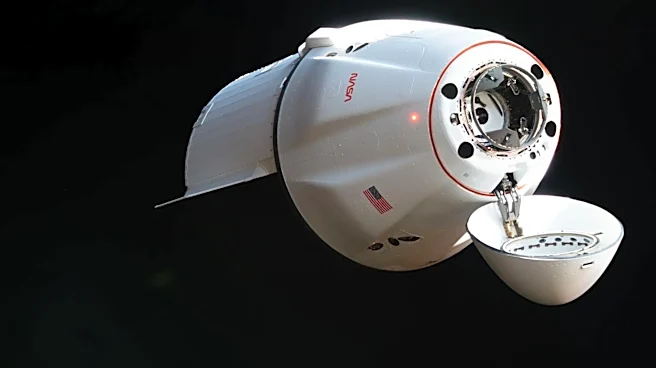
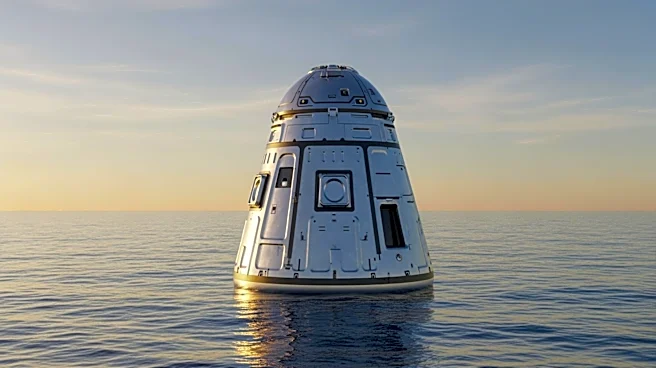
The SpaceX Dragon spacecraft has successfully completed its 34th commercial resupply mission to the International Space Station (ISS) for NASA, splashing down in the Pacific Ocean near Oceanside, California. The unpiloted spacecraft returned with a variety
of scientific samples and hardware, including bioprinted organ and cartilage tissue, data on cryogenic fuel storage, and DNA-inspired materials for cancer treatment development. The mission, which began with a launch from Cape Canaveral, Florida, on May 15, 2026, also brought back an ocular imaging device and other equipment used aboard the ISS.
Why It's Important?
This mission underscores the critical role of commercial partnerships in advancing space exploration and research. The successful return of scientific samples and equipment from the ISS highlights the potential for breakthroughs in medical and technological fields, such as cancer treatment and space mission sustainability. The collaboration between NASA and SpaceX exemplifies the growing trend of leveraging private sector capabilities to enhance national space programs, potentially accelerating innovation and reducing costs.
What's Next?
Following the successful splashdown, the scientific samples and equipment will be analyzed to further research in various fields. The data collected could lead to advancements in medical treatments and space exploration technologies. NASA and SpaceX are expected to continue their partnership, with future missions planned to support the ISS and other space initiatives. The ongoing collaboration may also inspire other private companies to engage in space exploration efforts, contributing to a more robust and dynamic space industry.