





What's Happening?
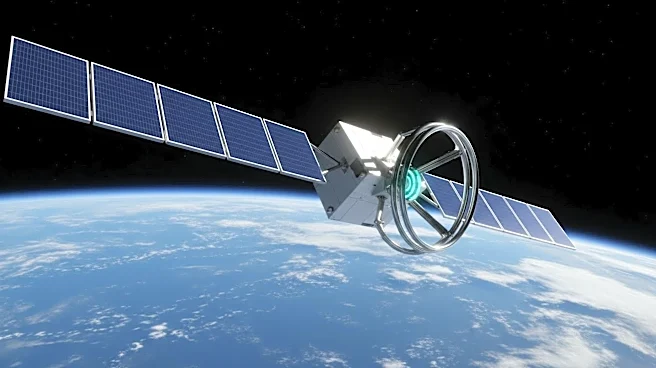
Zenno Astronautics, a New Zealand-based space startup, has successfully tested a new type of spacecraft thruster that operates without traditional fuel. The system, known as the 'Supertorquer,' utilizes superconducting magnets to harness Earth's magnetic
field, converting solar energy directly into momentum. This innovative technology was tested on a Mira satellite, developed by Impulse Space, and launched as part of a SpaceX rideshare mission. The Supertorquer system allows satellites to maintain their orbit and orientation without the need for chemical or electric thrusters, which typically rely on combustible fuel or electrical energy. The superconducting magnets are cooled to extremely low temperatures using a highly efficient heat pump system, enabling them to function effectively in space. Zenno Astronautics aims to scale up this technology for future spacecraft, potentially enabling docking maneuvers and propulsion to the Moon or Mars using only solar power.
Why It's Important?
The development of a fuel-free thruster system represents a significant advancement in space technology, potentially reducing the dependency on traditional fuel sources for satellite operations. This innovation could lead to more sustainable and cost-effective space missions, as it eliminates the need for carrying large amounts of fuel. The ability to harness Earth's magnetic field for propulsion could also extend the operational lifespan of satellites and reduce the risk of space debris. Furthermore, Zenno Astronautics' technology could pave the way for new applications in space exploration, such as radiation shielding for astronauts, enhancing safety during long-duration missions. The success of this technology could influence future spacecraft design and mission planning, promoting the use of renewable energy sources in space.
What's Next?
Zenno Astronautics plans to further develop and scale their Supertorquer system, with ambitions to enable spacecraft docking maneuvers and propulsion to celestial bodies like the Moon and Mars. The company is optimistic about the feasibility of these plans, although practical implementation and widespread adoption will require further testing and validation. The space industry and governmental space agencies may closely monitor these developments, as the technology could offer new opportunities for cost-effective and sustainable space exploration. Potential collaborations with other space companies and agencies could accelerate the integration of this technology into future missions.
Beyond the Headlines
The introduction of superconducting magnet technology in space propulsion could have broader implications beyond immediate applications. It may inspire further research into alternative energy sources and propulsion methods, potentially leading to breakthroughs in other fields such as terrestrial transportation and energy storage. The environmental benefits of reducing fuel consumption in space missions align with global sustainability goals, potentially influencing policy decisions and funding allocations for space research. Additionally, the concept of using magnetic fields for radiation shielding could have significant implications for astronaut safety, addressing one of the major challenges of long-term space travel.