







What's Happening?
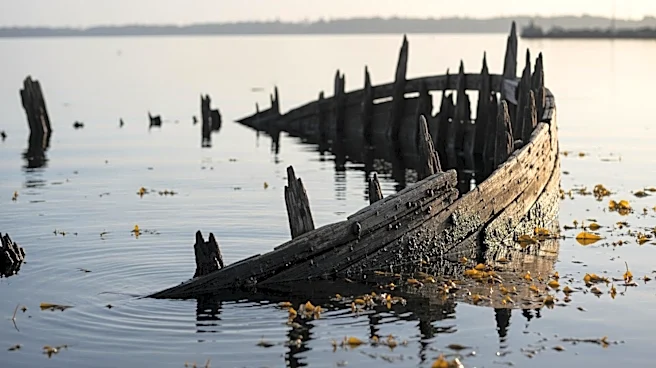
Marine archaeologists have discovered the wreck of the Danish warship Dannebroge in Copenhagen harbor, sunk during the Battle of Copenhagen in 1801. The battle was part of Britain's efforts to dismantle the League of Armed Neutrality, an alliance of northern
European powers. The Dannebroge, a 60-gun warship, was destroyed by British forces led by Admiral Horatio Nelson. The wreck site is set to become an artificial island for housing development, prompting archaeologists from Denmark's Viking Ship Museum to salvage artifacts. Initial findings include cannons, uniforms, and remains of sailors, providing new insights into the historical battle.
Why It's Important?
The discovery of the Dannebroge offers a unique opportunity to explore a pivotal moment in Danish history through archaeological evidence. It enhances understanding of naval warfare and international relations in the early 19th century. The findings contribute to historical scholarship and may attract public interest in maritime archaeology and heritage preservation. The project underscores the importance of preserving historical sites amid modern development, balancing cultural heritage with urban expansion.
What's Next?
As the excavation continues, archaeologists will analyze the recovered artifacts to gain further insights into the Battle of Copenhagen. The findings may be displayed in museums, contributing to public education and historical awareness. The development of the artificial island will proceed, with considerations for preserving the site's historical significance.