



What's Happening?
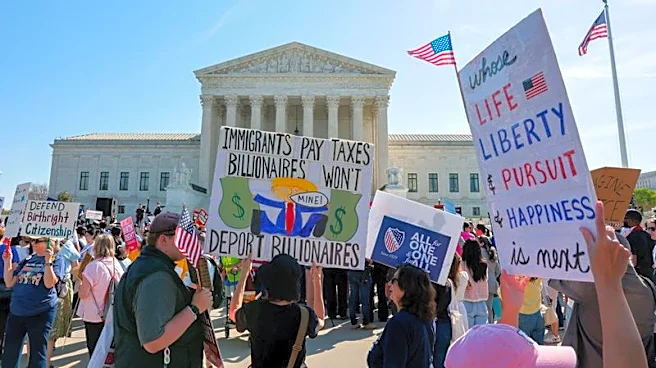
The Supreme Court recently heard arguments regarding the Trump administration's challenge to birthright citizenship, a principle established by the 14th Amendment. President Trump was present during the oral arguments, marking a presidential first. The administration argues
that the phrase 'subject to the jurisdiction thereof' does not apply to undocumented immigrants, as they owe allegiance to another country. However, the justices appeared skeptical of this interpretation, with Chief Justice John Roberts questioning the basis of the federal government's case. The challenge stems from an executive order issued by Trump aimed at disrupting chain migration.
Why It's Important?
The challenge to birthright citizenship has significant implications for immigration policy and the status of undocumented immigrants in the U.S. If successful, the Trump administration's efforts could lead to a dramatic increase in unauthorized immigrants, as reducing legal pathways often results in more undocumented individuals. This case highlights the ongoing debate over immigration and citizenship, with potential consequences for millions of people living in the U.S. The skepticism expressed by the Supreme Court justices suggests that the administration's case may face substantial hurdles.
What's Next?
The Supreme Court's decision on this case will be closely watched, as it could redefine the interpretation of the 14th Amendment and impact immigration policy. If the court upholds birthright citizenship, it would maintain the status quo, but the administration's message of skepticism towards certain citizenships remains clear. The outcome could influence future legislative efforts and shape the political landscape regarding immigration reform.