
What's Happening?
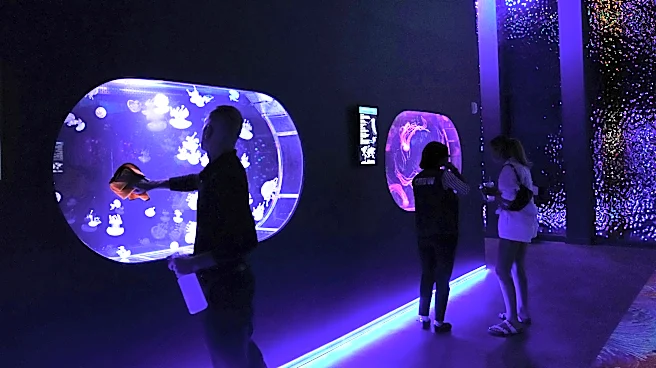
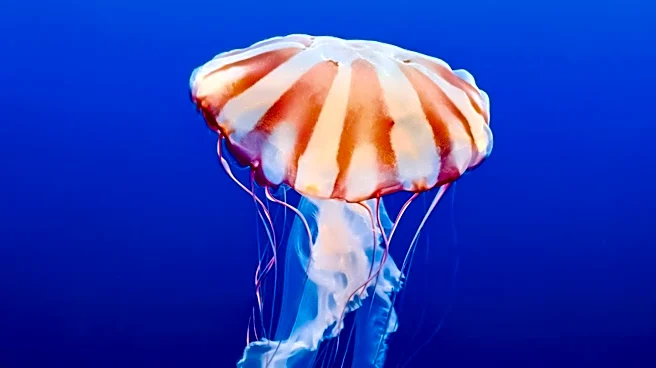
A new museum in Pompano Beach, Florida, has opened as the first in the United States dedicated entirely to jellyfish. This nearly 10,000-square-foot facility houses approximately 20 unique species of jellyfish across
21 different display tanks. The museum aims to mesmerize visitors with neon lights and the ancient sea creatures, which have inhabited oceans for over 500 million years, predating dinosaurs and trees. The institution was founded by Ukrainian aquarium developers, bringing a unique expertise to the specialized aquatic exhibit. The focus on a single type of marine life offers an in-depth look at these fascinating invertebrates.
Why It's Important?
The opening of a jellyfish-exclusive museum in Florida marks a significant development in marine education and tourism within the U.S. It provides a unique attraction that could draw visitors interested in marine biology and conservation, boosting local tourism and the economy in Pompano Beach. This specialized approach to an aquarium highlights the growing trend of niche educational and entertainment venues, catering to specific interests. For marine science, it offers a dedicated space for public engagement with these often-misunderstood creatures, potentially fostering greater appreciation and support for ocean conservation efforts. The museum's focus on jellyfish also underscores their ecological importance and evolutionary history, educating the public on their role in marine ecosystems.
What's Next?
The jellyfish museum is expected to become a notable attraction in Florida, drawing both local residents and tourists. Its success could inspire the development of other specialized marine life exhibits across the U.S., further diversifying the educational and entertainment landscape. The museum will likely continue to expand its collection of jellyfish species and educational programs, offering deeper insights into their biology and behavior. Future initiatives might include research collaborations or conservation efforts focused on jellyfish populations. The unique nature of the museum could also lead to partnerships with other scientific institutions or educational organizations to promote marine literacy.
Beyond the Headlines
Beyond its immediate appeal as a tourist attraction, the jellyfish museum in Florida carries deeper implications for how humans interact with and perceive marine life. By dedicating an entire facility to jellyfish, the museum challenges conventional aquarium models and encourages a more focused appreciation of specific species. This specialization can lead to a more profound understanding of these ancient creatures, highlighting their resilience and evolutionary success. It also subtly promotes a shift from broad, general marine exhibits to more detailed, species-specific explorations, which can be crucial for targeted conservation messaging. The museum's existence underscores the aesthetic and scientific value of even seemingly simple organisms, fostering a sense of wonder and respect for the natural world.