





What's Happening?
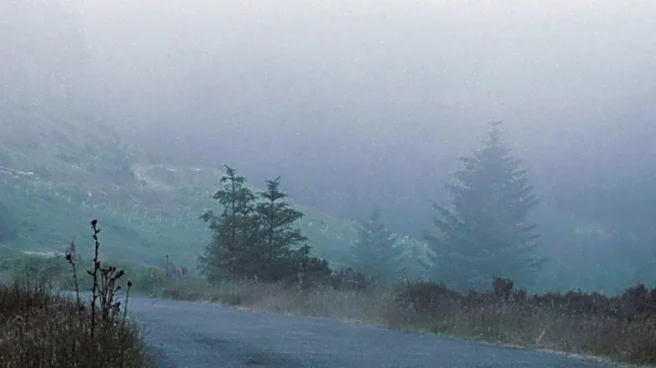
The National Weather Service in Portland issued a Dense Fog Advisory for the Salem area and much of the northern Willamette Valley. The advisory took effect at 1 a.m. Sunday and is scheduled to run until 10 a.m. Sunday. Forecasters anticipate visibility
to be a quarter mile or less within the dense fog, which could create hazardous driving conditions. This is the second fog advisory for the weekend, following an earlier one that covered Saturday morning. The advisory covers a wide region, including Salem, Keizer, and significant portions of Marion and Polk counties, as well as the Tualatin Valley, Portland metro area, and parts of the Lower Columbia River in Oregon and southwestern Washington. The advisory's end time is listed as 10 a.m. Pacific Standard Time, coinciding with the end of Daylight Saving Time.
Why It's Important?
The Dense Fog Advisory is important due to the significant safety risks it poses for motorists and pedestrians. Reduced visibility to a quarter mile or less drastically increases the likelihood of traffic accidents, making driving conditions treacherous. This advisory directly impacts daily commutes and travel plans for thousands of residents in the affected areas, including Salem, Keizer, and the broader Willamette Valley. The National Weather Service's recommendation for drivers to slow down and increase following distances, and for pedestrians and cyclists to wear bright clothing, highlights the critical need for caution. The timing of the advisory, coinciding with the end of Daylight Saving Time, adds another layer of complexity as drivers adjust to new light conditions and potentially increased fatigue, further emphasizing the need for heightened awareness on the roads.
What's Next?
Residents in the Salem area and northern Willamette Valley should continue to exercise extreme caution during the Dense Fog Advisory period. Drivers are advised to reduce speed, maintain ample distance from other vehicles, and use low-beam headlights. Pedestrians and cyclists should wear reflective or brightly colored clothing to enhance their visibility. The National Weather Service will monitor conditions and may extend or modify the advisory if the fog persists or intensifies. Local transportation authorities, such as ODOT TripCheck, will provide real-time updates on road conditions and highway cameras. Once the advisory expires, visibility is expected to improve, but drivers should remain vigilant for any lingering patches of fog, especially in low-lying areas.
Beyond the Headlines
Beyond the immediate safety concerns, recurring dense fog advisories in the Willamette Valley highlight the region's unique meteorological patterns and their impact on daily life. The valley's topography often traps moisture, leading to frequent fog events, particularly during cooler months. This consistent weather phenomenon influences local infrastructure planning, from road design to public safety campaigns. It also subtly shapes the rhythm of life for residents, who become accustomed to adjusting their routines and travel habits based on weather advisories. From an environmental perspective, fog plays a role in the local ecosystem, contributing to moisture levels that support the region's agriculture and natural landscapes. Understanding and adapting to these regular weather patterns is an integral part of living in the Willamette Valley, making such advisories a routine yet critical aspect of regional public safety and awareness.