




What's Happening?
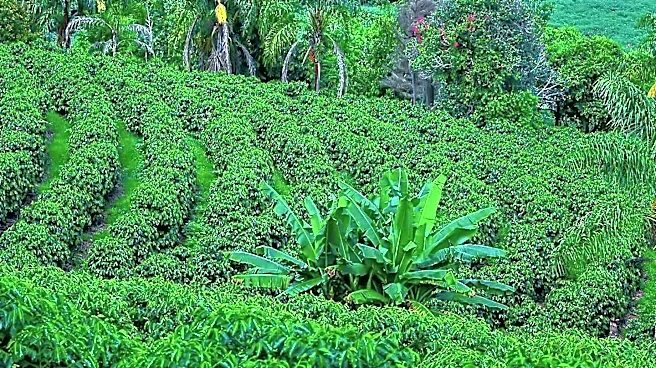
In southeastern Liberia, a surge in deforestation is occurring as illegal cocoa plantations expand in the rainforests of Grand Gedeh County. This development is driven by a 'gold rush' mentality among farmers and migrant workers from Côte d'Ivoire, spurred
by recent spikes in cocoa prices. The European Union's upcoming Deforestation Regulation, set to take effect at the end of the year, aims to ban imports of commodities like cocoa that contribute to deforestation. Liberia, unlike neighboring countries, has not invested in the necessary tracking infrastructure to comply with these new standards, leaving its cocoa industry vulnerable to significant economic impacts.
Why It's Important?
The EU's regulation represents a significant shift in global trade policies, emphasizing environmental responsibility and sustainable sourcing. For Liberia, this poses a substantial economic challenge, as cocoa is a key agricultural product. The lack of compliance infrastructure could lead to a loss of market access, affecting the livelihoods of many farmers who rely on cocoa production. This situation highlights the tension between economic development and environmental conservation, as well as the need for international cooperation to support sustainable agricultural practices.
What's Next?
As the EU regulation approaches, Liberia faces pressure to develop systems that ensure its cocoa production meets international standards. This may involve seeking international aid or partnerships to establish traceability systems. The situation also calls for increased awareness and education among local farmers about sustainable farming practices. The Liberian government and international stakeholders may need to collaborate on strategies to balance economic needs with environmental protection, potentially exploring agroforestry as a viable alternative to current practices.
Beyond the Headlines
The deforestation in Liberia underscores a broader systemic issue where economic pressures drive environmentally harmful practices. The EU's regulation, while well-intentioned, may inadvertently harm small-scale farmers unless accompanied by support mechanisms. This situation raises ethical questions about the responsibilities of developed nations in supporting sustainable development in less economically developed countries. It also highlights the potential for agroforestry to offer a sustainable solution, requiring investment and education to implement effectively.