



What's Happening?
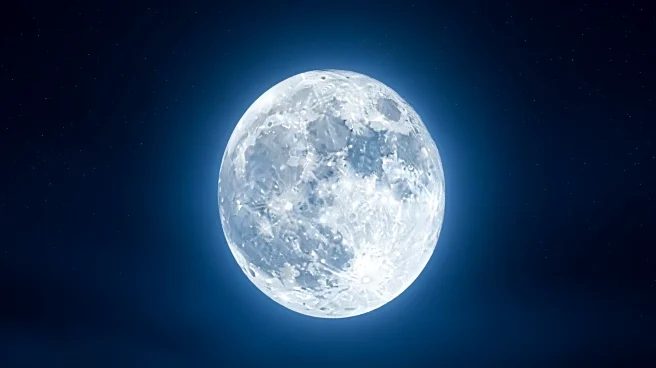
The first supermoon of 2026, known as the Wolf Moon, is set to illuminate the night sky on January 3rd at 5:03 a.m. EST, according to NASA. This celestial event will make the moon appear larger and brighter than a typical full moon due to its proximity
to Earth, known as perigee. The Wolf Moon, a name derived from the Maine Farmers’ Almanac and linked to Native American traditions, is the first full moon of January. It is traditionally associated with the howling of wolves during the cold winter months. This year, the supermoon coincides with the Quadrantid meteor shower, although the bright moonlight may obscure some of the fainter meteors. Additionally, Earth will reach its perihelion, the closest point to the Sun, on the same day. The moon will appear full for several nights, offering multiple opportunities for skywatchers to enjoy the spectacle, especially when it is low on the horizon during moonrise on January 2nd and 4th.
Why It's Important?
The Wolf Moon supermoon is significant as it offers a unique opportunity for astronomical observation and cultural reflection. Supermoons, which appear about 14% larger and 30% brighter than average full moons, captivate both amateur and professional astronomers. This event also highlights the intersection of natural phenomena and cultural traditions, as the Wolf Moon's name and lore are rooted in historical practices and beliefs. The alignment with the Quadrantid meteor shower and Earth's perihelion adds to the celestial interest, drawing attention to the dynamic nature of our solar system. Such events can inspire public interest in astronomy and science, fostering educational opportunities and community engagement through organized viewing events.
What's Next?
Skywatchers and astronomy enthusiasts are likely to organize viewing events to observe the Wolf Moon and the accompanying meteor shower. These gatherings can enhance community interest in astronomy and provide educational opportunities about celestial phenomena. Additionally, the event may prompt discussions about the cultural significance of moon names and their historical origins. As the year progresses, similar astronomical events will continue to draw public interest, potentially influencing future scientific outreach and educational programs.
Beyond the Headlines
The Wolf Moon supermoon underscores the enduring connection between natural events and cultural traditions. The name 'Wolf Moon' reflects a time when human survival was closely tied to the natural world, and such traditions continue to influence modern cultural practices. This event also highlights the importance of preserving dark skies for astronomical observation, as light pollution can significantly impact the visibility of celestial events. Efforts to reduce light pollution can benefit both scientific research and cultural appreciation of the night sky.