


What's Happening?
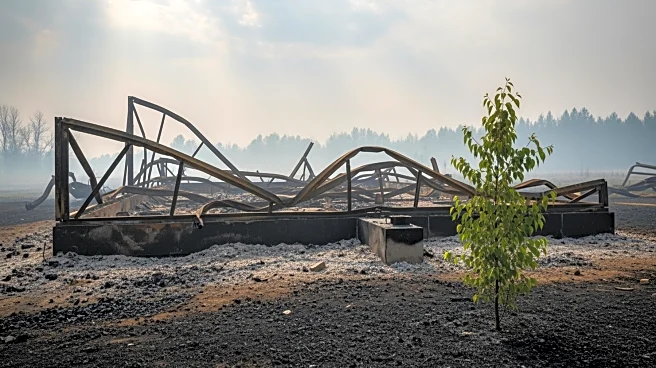
In Altadena, California, residents are grappling with the aftermath of devastating wildfires that occurred on January 7, 2025. The fires, which claimed over 30 lives and scorched 37,000 acres, have left a significant portion of the community displaced.
Many residents are facing challenges with insurance claims and bureaucratic hurdles, slowing the rebuilding process. As of early 2026, only a small number of homes have been rebuilt, with many residents still waiting for insurance payouts or considering legal action against the local utility company, Southern California Edison, which is suspected of having equipment that may have contributed to the fire. Despite these challenges, some residents, like Ted Koerner, have managed to rebuild, offering hope to others in the community.
Why It's Important?
The slow recovery process highlights the broader issues of disaster management and insurance in the U.S. The economic impact of the wildfires is estimated to be between $95 billion and $164 billion, affecting not only the residents but also the local economy. The situation underscores the need for efficient disaster relief and insurance processes to support affected communities. Additionally, the role of utility companies in such disasters raises questions about accountability and the adequacy of compensation programs. The ongoing struggle of Altadena residents reflects a larger national conversation about climate change, infrastructure resilience, and the responsibilities of corporations in disaster scenarios.
What's Next?
Residents are hopeful for more federal disaster aid, as California Governor Gavin Newsom continues to advocate for nearly $34 billion in federal assistance. Meanwhile, the rebuilding process is expected to continue slowly, with more homes anticipated to be completed by the end of 2027. The community is also looking to Southern California Edison for more substantial support, as negotiations and potential legal actions unfold. The outcome of these efforts could set precedents for future disaster recovery and corporate responsibility in similar situations.
Beyond the Headlines
The emotional and psychological toll on residents is significant, with many experiencing trauma and financial strain. The community's resilience is being tested, as they navigate the complexities of rebuilding their lives and homes. The situation also raises concerns about the future of the neighborhood, as developers eye vacant lots, potentially altering the community's character. This highlights the need for policies that protect the cultural and social fabric of communities affected by natural disasters.