
What's Happening?
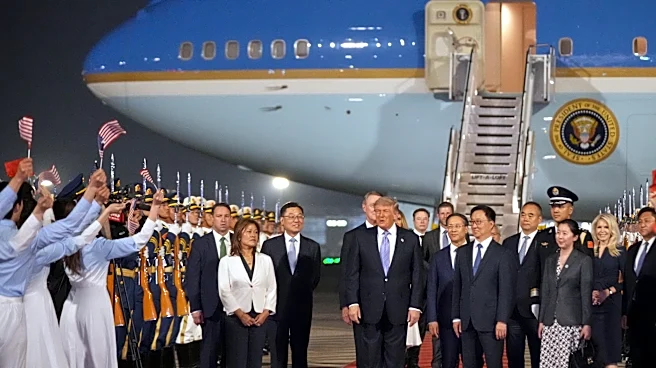
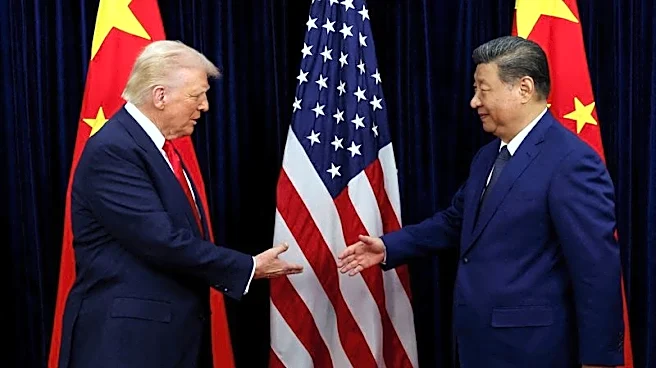
President Trump and China's President Xi Jinping are meeting in Beijing for the first time since October, amidst heightened geopolitical tensions. The summit occurs against the backdrop of the Iran war,
elevated oil prices, and a blockade of the Strait of Hormuz, which is affecting global oil supply. The meeting is closely watched by private equity and venture capital investors, who are hopeful for a reduction in uncertainty between the two nations. The relationship between the U.S. and China has been strained, particularly in areas like AI, biotechnology, and quantum computing, which have become geopolitical flashpoints. The summit's outcome could influence cross-border capital flows and market access for investors.
Why It's Important?
The Trump-Xi summit holds significant implications for global economic stability and investor confidence. A positive outcome could ease tensions and foster a more predictable business environment, encouraging investment in both countries. For private-market investors, reduced geopolitical uncertainty could lead to increased capital flows and investment opportunities. The summit also highlights the strategic importance of U.S.-China relations in shaping global economic trends, particularly in technology and innovation sectors. A failure to improve relations could exacerbate existing trade barriers and regulatory challenges, impacting global supply chains and market dynamics.
What's Next?
Following the summit, stakeholders will be keenly observing any policy announcements or agreements that could signal a thaw in U.S.-China relations. Investors will assess the implications for market access and regulatory environments, particularly in technology and finance sectors. The outcome may also influence future diplomatic engagements and trade negotiations between the two countries. Businesses and investors will need to navigate the evolving geopolitical landscape, balancing risks and opportunities in their strategic planning. The summit's impact on global markets will be closely monitored, with potential adjustments in investment strategies based on the perceived stability of U.S.-China relations.