


What's Happening?
The ongoing conflict with Iran has highlighted vulnerabilities in global infrastructure, particularly the undersea fiber-optic cables that carry over 95% of global data and voice call traffic. These cables, which are crucial for daily commerce and communication,
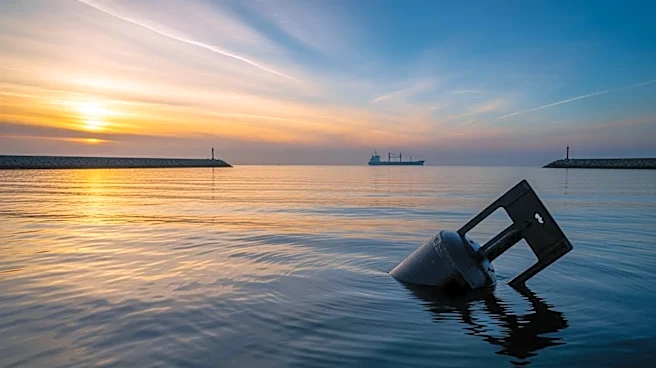
are largely unmonitored and inadequately protected, making them susceptible to damage or sabotage. Recent incidents in the Baltic Sea, where cables were severed, have underscored this risk. The U.S. and European intelligence agencies have noted that poorly maintained vessels may have caused these damages, but the potential for adversaries to exploit these vulnerabilities remains a significant concern. The situation is exacerbated by the development of technology capable of cutting cables at great depths, as well as the increasing reliance on these cables for artificial intelligence and clean energy projects.
Why It's Important?
The security of undersea cables is critical to maintaining global communication and economic stability. Any disruption can have disproportionate impacts, affecting everything from financial transactions to energy distribution. The current fragmented responsibility for cable protection in the U.S. highlights the need for a coordinated response, potentially led by the U.S. Navy. The European Union and NATO have already begun taking steps to protect these infrastructures, indicating the seriousness of the threat. The protection of these cables is not only a matter of national security but also presents commercial opportunities for companies involved in maritime technology and defense.
What's Next?
In response to these vulnerabilities, there is a push for more coordinated protection efforts. The U.S. Congress may consider designating a single entity to oversee cable protection, while Europe continues to enhance its surveillance and rapid repair capabilities. The commitment by NATO and the European Union to invest in defense-related infrastructure suggests that similar measures could be adopted in the U.S. This could lead to increased procurement of underwater robotics and surveillance technologies, benefiting companies in these sectors.
Beyond the Headlines
The issue of undersea cable security also raises ethical and legal questions about the responsibility of nations to protect global infrastructure. As the reliance on these cables grows, so does the potential for geopolitical tensions, particularly in regions where multiple countries have interests. The development of new technologies for cable protection and repair could also lead to shifts in the defense and technology industries, with increased collaboration between governments and private companies.