






What's Happening?
The United Nations is undergoing a significant reform process, dubbed UN80, which is prompting a re-evaluation of its humanitarian delivery mechanisms. A key proposition under examination is the potential for a substantially greater role for the private
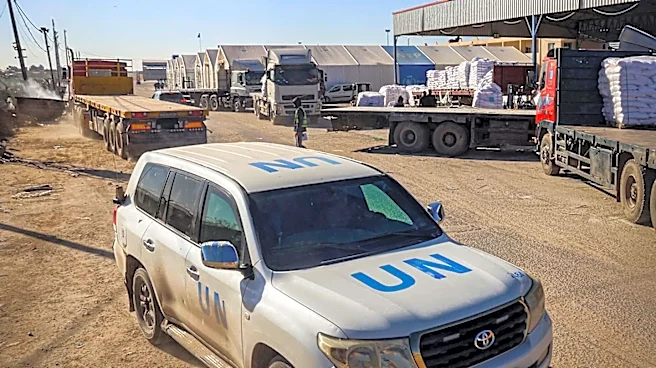
sector in humanitarian operations. Historically, UN organizations have managed most aspects of aid delivery internally, from procurement to distribution. However, the current financial pressures and the need for increased efficiency are leading to questions about whether international organizations need to perform all these functions themselves. The reform aims to reduce costs through measures like consolidating functions, relocating activities, and eliminating duplication. The discussion now extends to exploring whether contracting private operators for various stages of humanitarian aid, from procurement to final distribution, could lead to more efficient and cost-effective outcomes, with humanitarian organizations focusing on defining standards, outcomes, and independent verification.
Why It's Important?
This potential shift in humanitarian aid delivery models carries significant implications for the effectiveness and efficiency of global crisis response. By leveraging the adaptability and commercial incentives of the private sector, the UN could potentially deliver aid more rapidly and at a lower cost, especially in challenging environments where traditional humanitarian access is difficult. This could free up resources for international humanitarian organizations to focus on their core competencies: needs assessment, beneficiary identification, program design, setting standards, monitoring, evaluation, and accountability. A more flexible operating model, less reliant on maintaining permanent institutional capacity, could also be better suited to the unpredictable nature of humanitarian funding. However, it also necessitates robust frameworks for competition, clear standards, independent verification, and strong humanitarian oversight to mitigate risks such as market failures or underperforming contractors, ensuring that humanitarian principles remain paramount.
What's Next?
The UN80 reform process will continue to evaluate the feasibility and benefits of integrating the private sector more deeply into humanitarian delivery. This will involve developing clear guidelines, standards, and contractual frameworks for engaging private operators. Pilot programs or case studies may be initiated to test the effectiveness of such models in various contexts. International humanitarian organizations will need to strengthen their capacities in oversight, monitoring, and evaluation to ensure accountability and adherence to humanitarian principles. Discussions will also likely focus on how to balance efficiency gains with the imperative of reaching the most vulnerable populations, particularly in areas where commercial incentives might be limited. The outcome of these deliberations could lead to a significant restructuring of how humanitarian aid is conceptualized and executed globally.
Beyond the Headlines
The debate over private sector involvement in humanitarian aid delves into fundamental questions about the nature of humanitarianism itself. While efficiency and cost-effectiveness are crucial, the core mission of humanitarian action is to alleviate suffering without profit motive. Introducing commercial entities more broadly raises concerns about potential conflicts of interest, the prioritization of profitable routes over the most needy, and the erosion of neutrality and impartiality. It also highlights the resilience of commercial networks even in conflict zones, suggesting that markets can adapt where traditional aid structures struggle. This reform push could signify a broader trend towards market-based solutions in areas traditionally dominated by public or non-profit entities, challenging established norms and requiring a redefinition of roles and responsibilities within the global humanitarian ecosystem. The success of such a model will depend heavily on the UN's ability to establish and enforce stringent ethical and operational safeguards.