
What's Happening?
Dr. Sheila Nazarian, an Iranian-American who emigrated from Iran as a child, recently discussed the need for economic pressure on the top 10% of Iran's population. Speaking on 'Life, Liberty & Levin,'
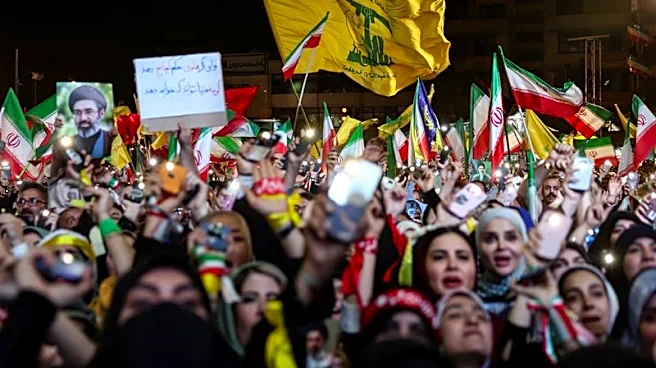
Dr. Nazarian highlighted her home country's desire for freedom. Her comments underscore a perspective that targeting the economic interests of the elite within Iran could be a strategic approach to influence the country's trajectory. This discussion comes amidst ongoing global conversations about Iran's internal dynamics and its international relations, particularly concerning its pursuit of freedom and the various pressures it faces.
Why It's Important?
The call for economic pressure on Iran's top 10% is significant because it suggests a targeted approach to foreign policy, aiming to impact the decision-makers and influential figures within the country rather than broad sanctions that might disproportionately affect the general populace. This strategy could potentially lead to internal shifts in power or policy by creating dissent among the elite who benefit most from the current system. If successful, such pressure could encourage reforms or changes in governance that align with the aspirations for freedom mentioned by Dr. Nazarian. Conversely, if mismanaged, it could further entrench the current regime or lead to unintended consequences, making the precise application and monitoring of such pressure crucial for its effectiveness and ethical implications.
What's Next?
Following Dr. Nazarian's advocacy, the discussion around targeted economic sanctions on Iran's elite is likely to gain more traction among policymakers and international relations experts. This could lead to increased scrutiny of the financial activities and assets of high-ranking Iranian officials and their associates. Governments and international bodies might explore mechanisms to identify and freeze such assets, potentially through enhanced intelligence gathering and international cooperation. The effectiveness of such measures would depend on the willingness of various nations to participate and the ability to circumvent methods used by the Iranian elite to hide their wealth. The long-term goal would be to foster internal pressure for change within Iran, aligning with the desire for freedom expressed by Dr. Nazarian.
Beyond the Headlines
The proposal to exert economic pressure on Iran's top 10% delves into the complex ethical and practical considerations of international sanctions. While broad sanctions often face criticism for harming ordinary citizens, a targeted approach aims to minimize such collateral damage by focusing on those perceived to be responsible for the country's policies. However, identifying and isolating the 'top 10%' without inadvertently affecting others can be challenging. This strategy also raises questions about the potential for unintended consequences, such as strengthening nationalist sentiment or driving the elite to seek alternative alliances. The underlying implication is a belief that economic leverage can be a powerful tool for promoting human rights and democratic values, but its application requires careful calibration to avoid exacerbating existing tensions or creating new humanitarian concerns.