


What's Happening?
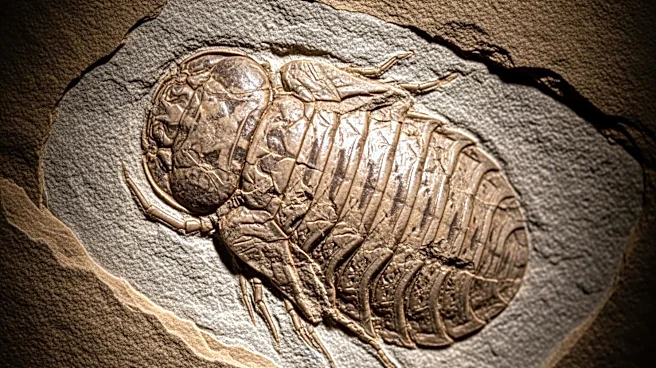
A 500-million-year-old fossil of a sea predator, Megachelicerax cousteaui, discovered in Utah's West Desert, has rewritten the evolutionary history of chelicerates, the arthropod group that includes spiders and horseshoe crabs. The fossil, studied by
researchers at Harvard University, pushes the origin of chelicerates back by 20 million years. It features a dorsal exoskeleton with distinct appendages and pincer-like chelicerae, marking it as the oldest known chelicerate. This discovery provides crucial insights into the Cambrian origin of chelicerates and the early development of their anatomical features.
Why It's Important?
The discovery of Megachelicerax cousteaui offers significant insights into the evolutionary history of chelicerates, revealing that key anatomical features had already evolved during the Cambrian period. This finding challenges previous assumptions about the timeline of chelicerate evolution and highlights the complexity of early arthropods. Understanding the origins of chelicerates is crucial for comprehending the evolutionary pathways that led to the diverse range of species we see today, including ecologically and economically important groups like spiders and horseshoe crabs.
What's Next?
The study of Megachelicerax cousteaui may prompt further research into the Cambrian period and the evolutionary history of arthropods. Paleontologists may seek additional fossil evidence to better understand the transition from early arthropods to modern chelicerates. This discovery could also inspire new hypotheses about the environmental and ecological factors that influenced the evolution of chelicerates and other arthropod groups during the Cambrian Explosion.
Beyond the Headlines
The discovery of such an ancient chelicerate fossil underscores the importance of paleontological research in uncovering the history of life on Earth. It also highlights the role of scientific collections and the dedication of researchers in preserving and studying fossils. The naming of Megachelicerax cousteaui in honor of Jacques-Yves Cousteau reflects the broader cultural impact of scientific discoveries and the inspiration they provide for understanding the natural world.