






What's Happening?
A rescue mission is underway to save the Neil Gehrels Swift Observatory, a space telescope launched in 2004 to study gamma-ray bursts. The telescope is at risk of burning up in Earth's atmosphere due to increased solar activity, which has accelerated
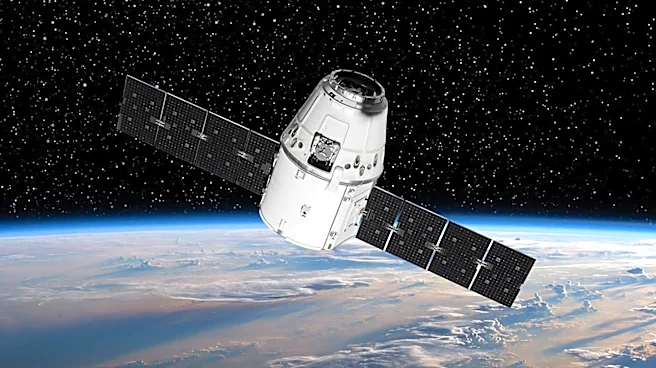
its descent. A robot named LINK, designed by an Arizona-based startup, has been launched into low Earth orbit to prevent this. LINK, roughly the size of a refrigerator, is tasked with attaching to Swift using robotic arms and boosting it to a higher orbit. This mission is unprecedented as it involves a fully autonomous robot performing a task traditionally done by astronauts.
Why It's Important?
The success of this mission could have significant implications for the sustainability of space operations. If LINK successfully boosts Swift, it could pave the way for similar interventions for other satellites, potentially extending their operational lifespans and reducing space debris. This technology could also attract interest from the defense sector, as the ability to maneuver satellites could be strategically valuable. The mission highlights the growing role of autonomous technology in space exploration and the potential for private companies to contribute to space sustainability.
What's Next?
If LINK successfully boosts the Swift Observatory, it could lead to broader adoption of robotic servicing missions for satellites. This could involve upgrading components or adjusting orbits, making space operations more sustainable. The defense community may also explore this technology for strategic purposes. The mission's outcome will likely influence future policies and investments in space technology, potentially leading to new collaborations between government agencies and private companies.