




What's Happening?
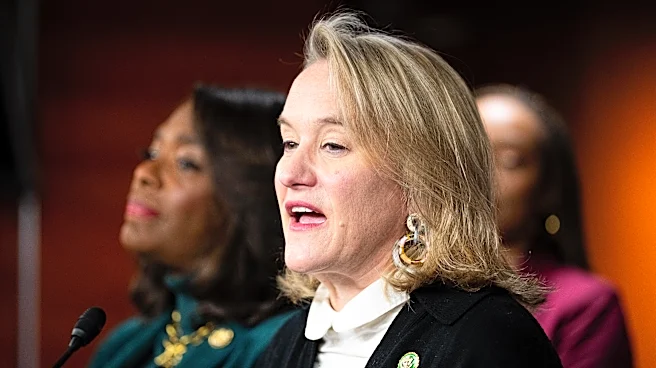
U.S. Representative Pramila Jayapal (WA-07) has introduced the Climate Workforce Resilience Act, legislation aimed at making significant investments in building a skilled workforce to address the climate crisis. The bill seeks to create millions of jobs
while focusing on communities disproportionately affected by climate change. Representative Jayapal highlighted the increasing severity and destructiveness of climate disasters, citing that in 2025, 23 individual weather and climate disasters each caused at least $1 billion in damages, totaling approximately $115 billion. The proposed act would establish millions of climate resilience jobs through grants to various governmental and non-profit organizations. It also aims to remove employment barriers based on immigration status by providing a pathway to citizenship for workers in climate resilience sectors and to remove barriers for individuals with prior criminal justice involvement. Additionally, the legislation would fund new and existing workforce development programs, prioritize pre-apprenticeship and apprenticeship programs, and support the development of climate resilience action plans centered on frontline communities. A key component is the creation of an Office of Climate Resilience within the White House to focus on planning, worker protection, and equity. The legislation is co-sponsored by Representatives André Carson (IN-07), Adelita S. Grijalva (AZ-07), Eleanor Holmes Norton (DC-AL), Jimmy Panetta (CA-19), and Rashida Tlaib (MI-12).
Why It's Important?
This legislation is significant as it addresses the dual challenges of climate change and economic development by proposing a comprehensive strategy to create jobs while building resilience against environmental disasters. The focus on a skilled workforce capable of responding to and preparing for climate impacts underscores a proactive approach to climate adaptation, which is crucial given the escalating costs of climate-related damages. By aiming to remove employment barriers for immigrants and individuals with criminal records, the act seeks to foster a more inclusive workforce, potentially tapping into underutilized labor pools and promoting social equity. The establishment of an Office of Climate Resilience within the White House signals a potential elevation of climate resilience as a national priority, integrating it into federal planning and policy-making. The bill's emphasis on community-based action plans ensures that solutions are tailored to the specific needs of frontline communities, which often bear the brunt of climate impacts. This initiative could set a precedent for how the U.S. approaches climate change, shifting towards a more integrated and workforce-centric strategy.
What's Next?
The Climate Workforce Resilience Act will now proceed through the legislative process in the U.S. House of Representatives. It will likely be referred to relevant committees for review, debate, and potential amendments. Given its broad scope and focus on job creation and climate action, the bill could garner support from various Democratic factions and potentially some bipartisan interest, especially concerning job creation aspects. However, it may also face opposition regarding its provisions on immigration status and criminal justice involvement, as well as the overall cost and scope of government intervention. Advocacy groups focused on climate change, labor rights, and immigration reform will likely mobilize to support its passage. The bill's future will depend on its ability to navigate committee approvals, secure sufficient votes in the House, and potentially gain traction in the Senate. If passed, it would lead to significant federal investment in climate resilience infrastructure and workforce development programs across states, counties, cities, and tribal governments.
Beyond the Headlines
The Climate Workforce Resilience Act represents a broader shift in how climate change is being framed—not just as an environmental issue, but as an economic and social justice imperative. By linking climate action directly to job creation and workforce development, the legislation attempts to build a wider coalition of support, appealing to economic interests alongside environmental concerns. The provisions to remove employment barriers for immigrants and individuals with prior criminal justice involvement highlight a progressive approach to workforce inclusion, aiming to address systemic inequalities while tackling climate challenges. This could set a new standard for federal programs, integrating social equity goals with environmental policy. Furthermore, the proposed Office of Climate Resilience within the White House suggests a long-term commitment to institutionalizing climate adaptation at the highest levels of government, potentially influencing future administrations and ensuring sustained focus on resilience efforts. This holistic approach could redefine the national strategy for climate change, emphasizing human capital and community empowerment as central to effective climate response.