







What's Happening?
The US military is being urged to adapt more swiftly to modern warfare by integrating commercial technology, particularly in communications and electronic warfare (EW). According to Bryan Clark, a senior fellow at the Hudson Institute, modern military communications increasingly
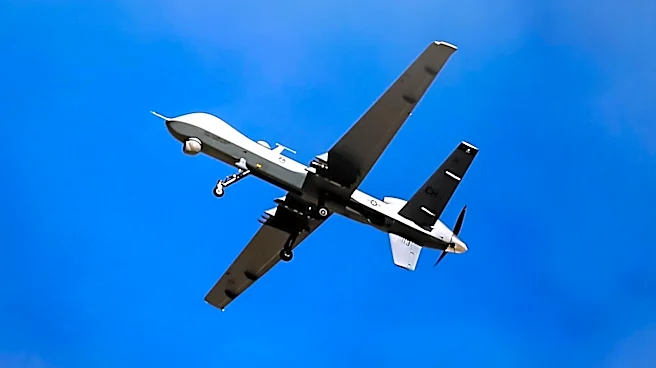
resemble commercial mobile and satellite networks. This shift is driven by the availability, cost-effectiveness, and non-sensitive nature of commercial systems. The Hudson Institute's analysis, based on wargames conducted with the US Navy over the past three years, highlights the use of commercial components in military applications, such as guidance computers and sensors in missiles and drones. The report emphasizes the role of artificial intelligence (AI) in enhancing command-and-control (C2) software, which often derives from commercial planning algorithms.
Why It's Important?
The integration of commercial technology into military operations could significantly enhance the US military's efficiency and adaptability in modern combat scenarios. By leveraging commercially available systems, the military can reduce costs and improve the speed of technological deployment. This approach also allows smaller nations and non-state actors to access advanced military capabilities, potentially leveling the playing field. The use of AI in decision support tools could further enhance strategic planning and operational effectiveness. However, this reliance on commercial technology may also pose security risks, as these systems are more accessible to adversaries.
What's Next?
The Hudson Institute is expected to release a detailed report on its wargame analysis and recommendations, which could influence future military procurement and strategy. The US military may consider increasing its collaboration with commercial tech companies to develop and deploy advanced systems more rapidly. This could lead to policy changes and new funding allocations to support the integration of commercial technology in military operations. Stakeholders, including defense contractors and tech firms, may need to navigate new regulatory and security challenges as they engage in these partnerships.