





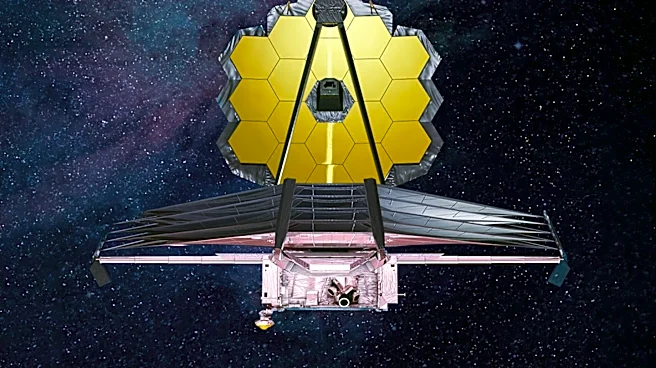
What's Happening?
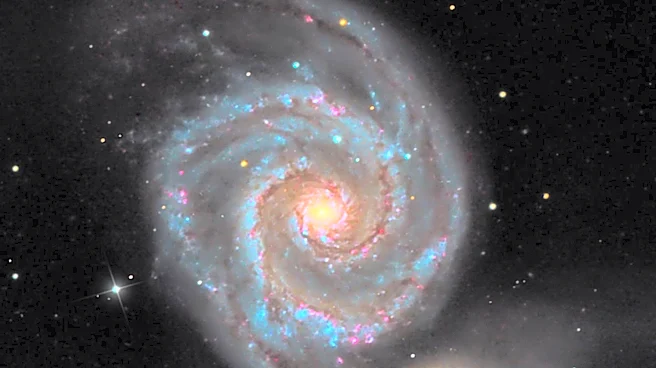
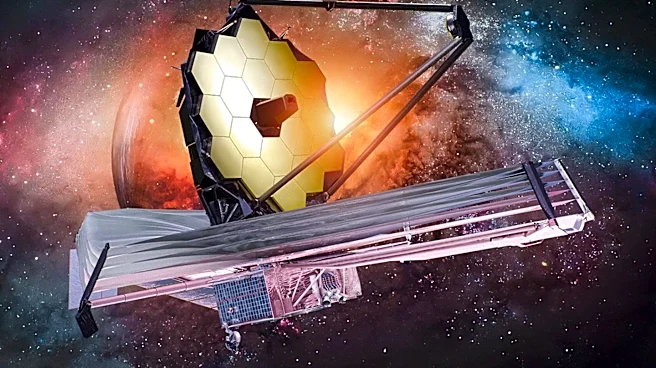
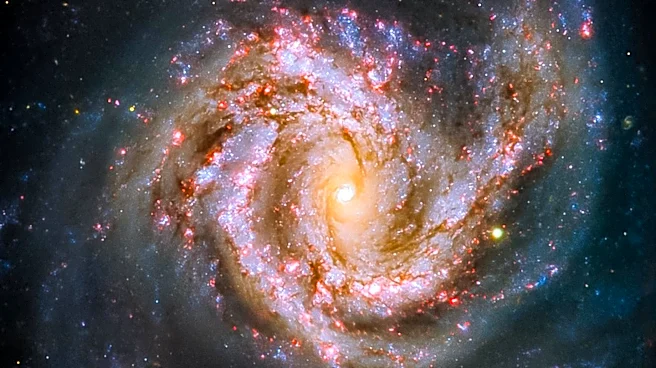
A recent study using the James Webb Space Telescope (JWST) has discovered that the dwarf galaxy Sextans A, located 4.6 million light-years from Earth, is producing dust from metallic iron and silicon carbide earlier than previously thought possible. This
finding challenges existing models that suggested such dust formation would be negligible in low-metallicity environments until well after the universe's first billion years. The study, led by Claudio Gavetti, utilized JWST's NIRCam and MIRI instruments to map the galaxy's aging stars, revealing that even in extreme metal poverty, stars can produce significant amounts of dust.
Why It's Important?
This discovery has significant implications for our understanding of the early universe and the 'dust budget crisis,' which refers to the discrepancy between observed dust in early galaxies and what theoretical models predict. The ability of stars in metal-poor environments to produce dust earlier than expected suggests that the timeline for dust formation in the universe may need to be revised. This could impact models of galaxy evolution and the interpretation of high-redshift observations, potentially altering our understanding of the conditions in the early universe.