
What's Happening?
President Trump's interest in acquiring Greenland has caused tension between the United States and Denmark, long-time allies. The proposal has been met with resistance from both Danish and Greenlandic
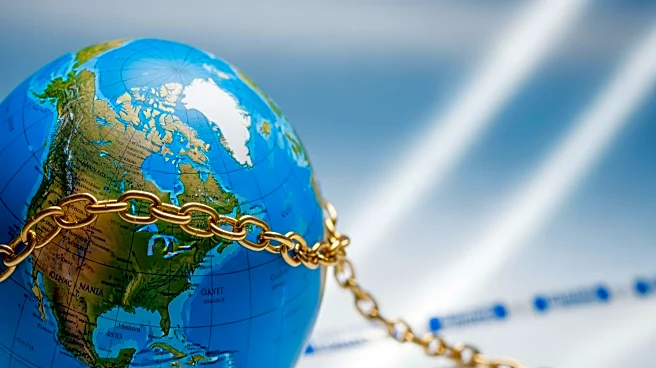
leaders, who view the move as a betrayal. Greenland, the world's largest island, is strategically important due to its vast mineral resources and military significance. The island is 80% covered in ice, yet it holds valuable resources that are critical for economic and technological advancements. The U.S. sees Greenland as a key asset in reducing dependency on Chinese rare earth minerals, which are essential for various industries.
Why It's Important?
The acquisition of Greenland is seen as a strategic move by the U.S. to enhance its geopolitical influence in the Arctic region. The island's mineral wealth is crucial for the U.S. to secure a stable supply of rare earth elements, reducing reliance on China. This move could significantly impact U.S. foreign policy and its relations with European allies. The situation highlights the growing importance of the Arctic in global geopolitics, as nations vie for control over its resources and strategic locations. The potential economic and political ramifications are substantial, affecting international trade and security dynamics.
What's Next?
The U.S. may continue to pursue diplomatic channels to negotiate Greenland's status, although Denmark and Greenland have firmly opposed any sale. The situation could lead to further discussions within NATO and influence future U.S. strategies in the Arctic. The international community will likely keep a close watch on these developments, given their broader implications for global trade and security. The outcome could shape future interactions between powerful nations and smaller states over strategic resources.