



What's Happening?
The collapse of Iran's Bank Ayandeh in October 2025 has exposed significant vulnerabilities within the country's financial system. The bank's failure, resulting in nearly $5 billion in losses, was not merely a case of poor management but indicative of deeper
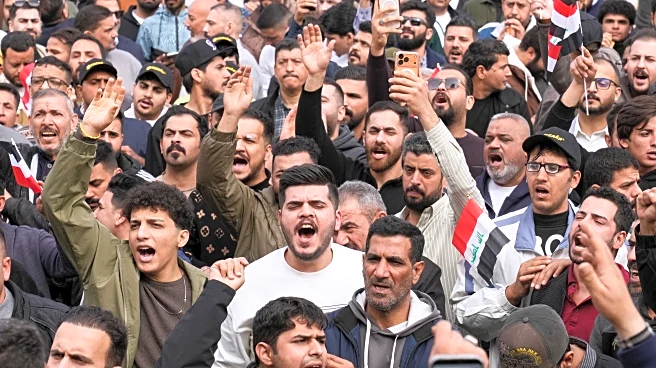
structural issues exacerbated by corruption and international isolation. In response, Iranian authorities transferred the bank's liabilities to the state-run Bank Melli, a move that placed the burden on the national balance sheet and highlighted the Central Bank's limited capacity to manage systemic risks. To address the financial shortfall, the government resorted to large-scale money printing, which accelerated inflation and severely impacted the middle class. By late December 2025, the Iranian rial plummeted to a record low against the U.S. dollar, sparking protests from merchants in Tehran's Grand Bazaar.
Why It's Important?
The collapse of Bank Ayandeh and the subsequent economic turmoil underscore the fragility of Iran's financial system, which has been strained by years of international sanctions and internal mismanagement. The rapid devaluation of the rial and soaring inflation rates threaten to destabilize the country's economy further, eroding public trust and potentially leading to widespread unrest. The situation is compounded by the disruption of key trade routes, such as the Caracas-Tehran link, which Iran relied on to circumvent sanctions. As the government struggles to maintain control, the economic crisis could weaken the regime's grip on power, especially if traditional methods of repression prove ineffective against economically driven protests.
What's Next?
Iran's economic outlook remains bleak, with the World Bank projecting continued contraction and inflation rates potentially reaching 60%. The government's ability to stabilize the economy is limited, given the ongoing sanctions and loss of external financial channels. The leadership's recent capital flight suggests a lack of confidence in the country's financial stability, which could further undermine public trust. As protests continue, the regime may face increasing pressure to implement economic reforms or risk further destabilization. The international community will likely monitor the situation closely, as Iran's economic instability could have broader geopolitical implications.
Beyond the Headlines
The economic crisis in Iran highlights the broader challenges faced by regimes that prioritize ideological goals over fiscal responsibility. The collapse of Bank Ayandeh serves as a cautionary tale of how systemic corruption and isolation can lead to financial ruin. The situation also raises ethical questions about the government's decision to prioritize elite asset protection over the welfare of its citizens. As inflation erodes household incomes, the social contract between the state and its people is increasingly strained, potentially leading to long-term shifts in public sentiment and governance.